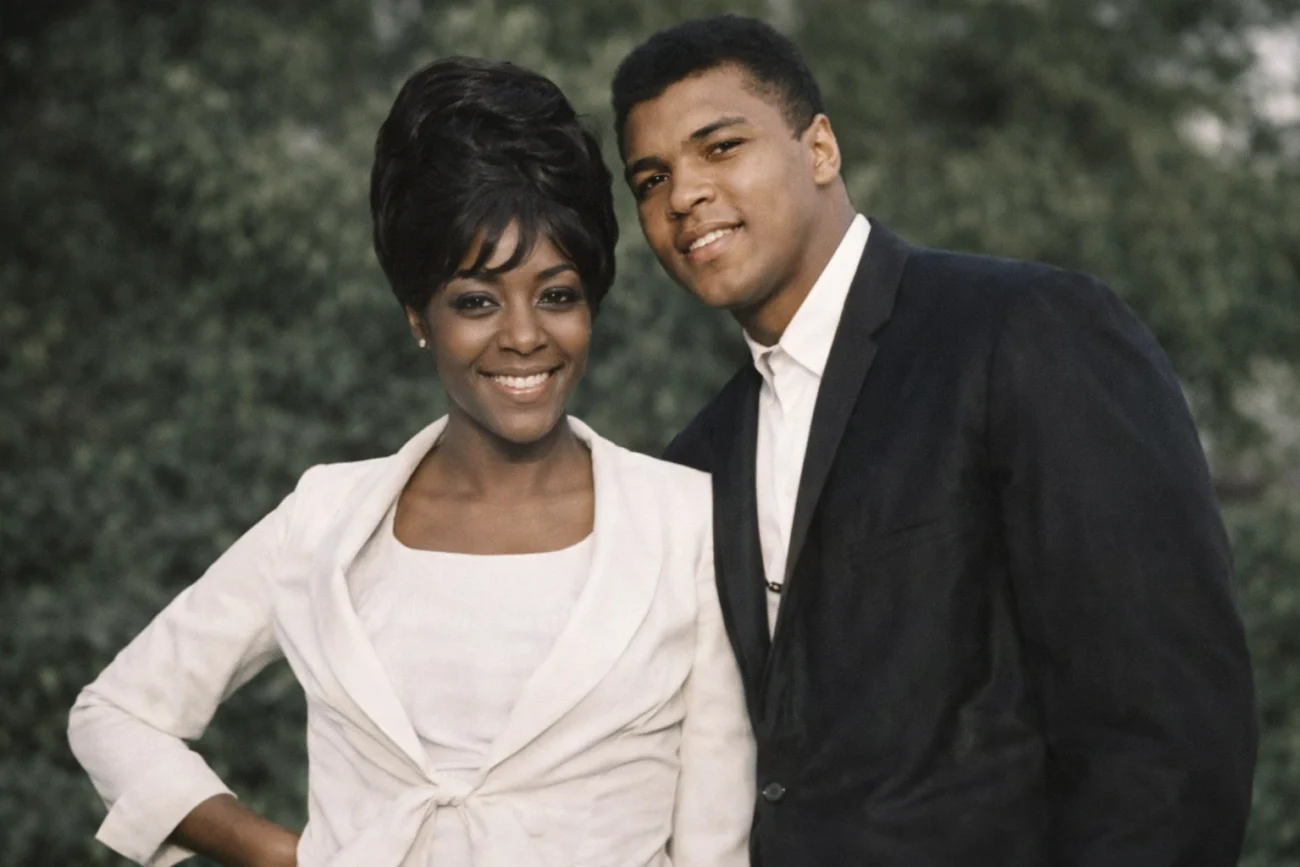
For many people, the name Sonji Roi appears as a footnote in the towering life story of Muhammad Ali. She is often introduced in a single line: his first wife, married briefly in the mid-1960s. But that simple description leaves out the tension, speed, and human complexity of a relationship that unfolded during one of the most volatile periods in Ali’s life.
Sonji Roi’s story is not just about who she married. It is about timing, identity, and the cost of standing firm when the person beside you is changing in ways the world is watching. Her life intersected with fame at a moment when fame itself was shifting, shaped by politics, religion, and public pressure.
She lived most of her life away from headlines. Still, the brief period when she stood next to a rising global figure continues to draw attention, not because it lasted long, but because of what it revealed.
Early Life and Background
Details about Sonji Roi’s early life are limited, and that absence has shaped how she is remembered. She was born in the United States in the mid-1940s, though even her exact birth year is debated across sources. That lack of clarity speaks to a larger truth about her life: she was never someone who sought the spotlight on her own terms.
What is generally agreed upon is that she grew up during a time when opportunities for young Black women were expanding but still tightly constrained. The early 1960s were a period of change, but also of restriction, especially in industries like entertainment and hospitality where she would later work. Like many women of her generation, she moved into adult life balancing independence with the expectations placed on her.
By the time she crossed paths with Muhammad Ali, then still known as Cassius Clay to many, she was working as a cocktail waitress. Some accounts also describe her as a model, which fits with the social circles she moved in during that period. These roles placed her in environments where athletes, entertainers, and public figures regularly crossed paths.
Meeting Muhammad Ali
The story of how Sonji Roi met Muhammad Ali has been repeated often, and for good reason. It captures the speed and intensity that would define their relationship from the start. They met in July 1964, at a moment when Ali’s fame was already surging after his victory over Sonny Liston earlier that year.
Accounts from that time describe a whirlwind connection. Ali was known for his confidence, his quick speech, and his ability to make bold decisions without hesitation. According to widely cited recollections, he proposed marriage on the night they met, or very shortly after.
That pace might sound surprising now, but it reflected both his personality and the moment he was in. He was young, newly famous, and beginning to reshape his public identity. Sonji Roi, by contrast, entered this world suddenly, without the infrastructure of public life around her.
They married on August 14, 1964, in Gary, Indiana. It was a quick ceremony, carried out just weeks after they met. At that point, Ali was still navigating the early stages of his association with the Nation of Islam, a connection that would soon define much of his public and private life.
Marriage During a Time of Change
The timing of their marriage matters. It took place just as Ali was transitioning from Cassius Clay to Muhammad Ali, both in name and in identity. His involvement with the Nation of Islam was deepening, and that came with expectations about behavior, appearance, and personal conduct.
For Sonji Roi, this shift created immediate tension. She had entered the marriage without fully sharing the religious commitments that were becoming central to Ali’s life. That difference was not minor. It touched on daily routines, clothing, public appearances, and social life.
Ali, under the influence of the Nation of Islam’s teachings, was encouraged to expect certain standards from his wife. These included modest dress and a more restricted lifestyle. Sonji Roi, however, did not adopt those expectations in full, and reports from the time suggest that she resisted them.
Here’s where it gets interesting. Their disagreement was not just about clothing or routine. It reflected a deeper divide between two people moving in different directions. Ali was aligning himself with a strict and highly visible religious path. Sonji Roi was maintaining her own sense of independence.
Why the Marriage Ended
The marriage lasted less than two years, ending in divorce on January 10, 1966. The reasons have been discussed in various biographies and historical accounts, and while the details vary, the core issue appears consistent. Their conflict centered on lifestyle, religious expectations, and personal autonomy.
Ali later spoke about the importance of religious discipline in his life, and those close to him at the time supported that shift. For Sonji Roi, the expectations placed on her did not align with how she wanted to live. She did not fully adopt the dress codes or behavioral restrictions that were expected within Ali’s religious circle.
The tension grew quickly. Public attention only made it harder, as their private disagreements became part of a larger narrative about Ali’s transformation. The divorce, when it came, was relatively swift.
What stands out is how little drama was publicly aired at the time. There were no extended public disputes or prolonged legal battles. The separation was clean, at least from the outside, but it left behind a story that would be revisited again and again in later accounts of Ali’s life.
Life After Muhammad Ali
After the divorce, Sonji Roi stepped away from the public attention that had briefly surrounded her. Unlike Ali, whose life remained intensely public, she chose a quieter path. That decision has shaped how little is widely known about her later years.
She later married a man named Reynaldo Glover, and records suggest that she built a family life outside of the spotlight. Compared to her brief time in the public eye, this period of her life was largely private, with few documented appearances or interviews.
Not many people know this, but her decision to remain out of the spotlight contrasts sharply with the modern pattern of maintaining public visibility after a high-profile relationship. She did not write a memoir, give extended interviews, or attempt to reshape her public image.
Instead, her life continued largely outside of media attention. This has made it harder for historians and writers to construct a full picture of her later years, but it also reflects a deliberate choice to move on.
Death and Later Recognition
Sonji Roi died on October 11, 2005, in the United States. Details about her death are not widely documented, and reports differ on the exact cause. Some sources describe it as natural causes, while others suggest a heart-related issue. Without consistent documentation, most responsible accounts avoid stating a definitive cause.
Her passing did not generate widespread media coverage at the time, which again reflects how far removed she had become from public life. However, her name continued to appear in biographies, documentaries, and retrospectives about Muhammad Ali.
As interest in Ali’s life has continued, especially after his death in 2016, attention has returned to the people who were part of his early years. That includes Sonji Roi, whose short marriage to him remains a point of curiosity.
Why Sonji Roi Still Matters
So what does this story actually mean today? Sonji Roi’s life offers a glimpse into a moment when personal relationships were deeply affected by larger social and cultural forces. Her marriage to Ali happened during a period of rapid change, both for him and for the country.
She represents a perspective that is often missing in celebrity biographies. While much has been written about Ali’s growth and transformation, less attention has been given to how those changes affected the people closest to him.
Her refusal to fully conform to expectations placed on her is one of the most consistent elements of her story. That choice, simple as it might seem, placed her at odds with a powerful movement and a man who was becoming a global figure.
Frequently Asked Questions
FAQ
Who was Sonji Roi?
Sonji Roi was an American woman best known as the first wife of boxing legend Muhammad Ali. They married in 1964 during the early stages of his rise to global fame. Although their marriage was short-lived, it remains a notable part of Ali’s personal history. Beyond that connection, she lived much of her life privately.
When did Sonji Roi and Muhammad Ali get married?
Sonji Roi and Muhammad Ali were married on August 14, 1964, in Gary, Indiana. The marriage took place only weeks after they first met. Their relationship moved quickly, reflecting the intense and fast-paced nature of Ali’s life at the time. The timing also coincided with his growing involvement in the Nation of Islam.
Why did Sonji Roi and Muhammad Ali divorce?
Their marriage ended largely due to differences over lifestyle and religious expectations. Ali’s commitment to the Nation of Islam brought new rules and expectations into his personal life. Sonji Roi did not fully adopt those changes, particularly around dress and daily conduct. These differences created tension that led to their divorce in 1966.
Did Sonji Roi have children with Muhammad Ali?
No, Sonji Roi and Muhammad Ali did not have children together during their marriage. Their relationship was relatively brief, lasting less than two years. Ali went on to have children in later marriages. Sonji Roi’s later family life occurred outside the public spotlight.
What happened to Sonji Roi after her divorce?
After her divorce from Muhammad Ali, Sonji Roi largely withdrew from public life. She later married Reynaldo Glover and is believed to have built a private family life. Unlike many people connected to famous figures, she did not maintain a public presence. As a result, details about her later years remain limited.
Conclusion
Sonji Roi’s life does not fit neatly into the kind of biography that fills shelves. There are gaps, uncertainties, and long stretches where the record goes quiet. But those gaps are part of what makes her story stand out. She was present at a moment of intense change, then chose to step away from the attention that came with it.
Her marriage to Muhammad Ali was brief, but it unfolded at a time when his identity was shifting in ways that would shape history. That makes her part of a larger story, even if she did not seek that role. The tension between personal choice and public expectation runs through every account of their relationship.
There’s also something striking about how she is remembered. Not as a public figure in her own right, but as someone whose life intersected with fame and then moved beyond it. That contrast gives her story a different kind of weight.
Looking ahead, interest in Sonji Roi is unlikely to fade completely. As long as people continue to revisit Muhammad Ali’s life, they will encounter her name and wonder who she was. The answer, as it turns out, is more than a single line in someone else’s story.
