Search for “doujen moe” and you’ll run into a strange mix of definitions. Some pages treat it like a well-established genre. Others describe it as a niche corner of anime culture. A few don’t explain it at all, assuming you already know what it means. That confusion isn’t accidental. The phrase itself sits on shaky ground, and understanding it requires stepping back into the deeper world it points to.
At its core, “doujen moe” appears to be a loose or mistaken variant of “doujin moe,” a term built from two separate ideas in Japanese pop culture: doujin, referring to self-published works, and moe, describing a strong emotional affection toward fictional characters. Those ideas are real, well documented, and deeply embedded in anime and manga culture. The exact phrase “doujen moe,” however, is far less stable.
But here’s the thing. Even if the keyword itself is messy, the culture behind it is not. To make sense of what people are really searching for, you have to unpack how fan-made media works in Japan, how the idea of “moe” developed, and how both concepts merged into a recognizable style of storytelling and art.
What “Doujen Moe” Actually Refers To
Most people who type “doujen moe” into a search bar are trying to understand a specific kind of content: fan-made or independent works that emphasize cute, emotionally appealing characters. The phrase doesn’t come from official classification systems or industry standards. It’s more of a shorthand that has spread online, often without careful definition.
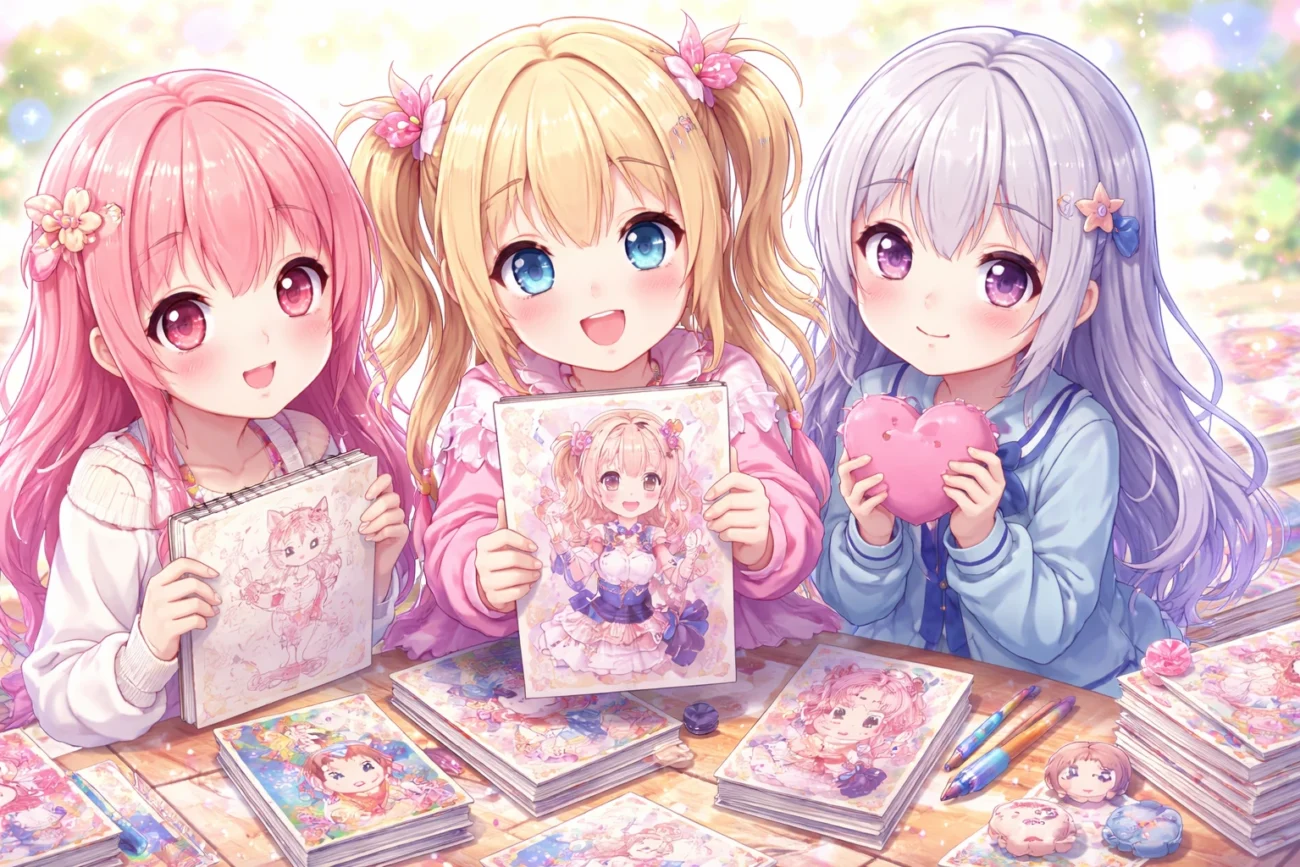
In practice, the term points toward works that combine two elements. First, they are part of the doujin world, meaning they are self-published, often by small groups or individual creators. Second, they lean heavily into moe, a concept tied to feelings of affection, protectiveness, or emotional attachment toward fictional characters.
That combination is easy to recognize even if the name isn’t. Think of a fan-created comic featuring a beloved anime character drawn in a softer, more endearing style. Or an original visual novel built around a cast of charming, slightly exaggerated personalities designed to evoke warmth rather than tension. That’s the kind of material people have in mind, even if they’re not using the precise terminology.
Why the Spelling Is So Inconsistent
The word “doujen” doesn’t have a strong foundation in standard Japanese romanization. The more accurate spelling is “doujin,” derived from the Japanese word 同人, which refers to a group of people with shared interests. Over time, that term became closely tied to self-published creative works.
So why does “doujen” show up at all? In many cases, it’s the result of spelling drift. Online writing often introduces small variations, especially when words move between languages and alphabets. Search engines don’t always correct these variations, and once a version gains traction, it starts to appear more frequently in articles, forums, and blog posts.
Here’s where it gets interesting. Some sites now treat “doujen moe” as if it were a distinct concept, even though it likely began as a misspelling or informal variation. That creates a feedback loop. People search the term, find pages that define it, and assume it’s widely accepted. The cycle continues, even without strong backing from primary sources.
Doujinshi: The Foundation of the Culture
To understand what people mean by “doujen moe,” you have to start with doujinshi, the backbone of the entire scene. Doujinshi are self-published works, often produced outside traditional publishing houses. They can include manga, novels, art books, and even software or games.
The roots of this culture go back decades. One of the most important milestones is the creation of Comic Market, commonly known as Comiket, which began in Tokyo in 1975. The first event was small, with just a few dozen participating circles and a few hundred attendees. Over time, it grew into one of the largest fan conventions in the world, drawing hundreds of thousands of visitors.
Doujinshi are often created by “circles,” which are groups of artists or writers who collaborate on projects. Some works are entirely original, while others borrow characters and settings from existing series. This mix of originality and homage is a defining feature of the culture.
For many creators, doujinshi serve as a testing ground. Artists experiment with ideas, refine their style, and build an audience. Some eventually transition into mainstream publishing, while others remain in the independent scene by choice.
What “Moe” Means in Anime and Manga
The second half of the phrase, moe, is harder to pin down but just as important. The term gained popularity in Japan in the 1990s and is often used to describe a strong emotional response to fictional characters. It’s not just about finding a character cute. It’s about feeling drawn to them in a way that triggers affection, protectiveness, or even nostalgia.
Moe can show up in many forms. It might be a shy character who struggles to express themselves, a cheerful personality who brightens every scene, or a design that emphasizes softness and approachability. The exact traits vary, but the goal is consistent: to create an emotional connection with the audience.
Not everyone agrees on how to define moe. Some see it as a marketing strategy, while others view it as a genuine expression of character design. That debate has been ongoing for years, and it reflects broader tensions in anime culture between art, commerce, and fan expectations.
Where Doujin and Moe Overlap
When these two ideas come together, you get what people are usually pointing to with “doujin moe.” The overlap creates a specific type of content that feels both personal and familiar. It often takes known characters and reimagines them in softer, more emotionally focused settings. In other cases, it introduces entirely new characters built from the ground up to evoke that same emotional pull.
This combination works well because doujin creators have more freedom than mainstream studios. They can explore niche ideas, focus on character-driven stories, and cater directly to specific fan interests. There’s no need to appeal to a broad audience or fit within a publisher’s expectations.
That freedom can lead to highly creative work. It can also produce repetitive or formula-driven content, especially when certain character types prove popular. The balance between originality and imitation is a constant tension within the scene.
The Role of Comiket and Fan Events
Any discussion of doujin culture has to include Comiket, which remains its most visible stage. Held twice a year in Tokyo, the event brings together thousands of circles and hundreds of thousands of visitors. It’s a place where creators sell their work directly to fans, often in limited print runs.
Walking through Comiket, you can see the full range of doujin output. Some tables feature polished books that rival professional publications. Others display simple stapled zines created on a tight budget. The diversity is part of the appeal.
Moe-focused works are easy to spot in this environment. They often feature bright covers, expressive characters, and themes that lean toward humor, romance, or slice-of-life storytelling. For many fans, these works offer a more intimate connection than mainstream media.
The Legal Gray Area Around Doujin Works
There’s a catch, though. Much of the doujin world operates in a legal gray zone, especially when it comes to derivative works. Many doujinshi borrow characters and settings from copyrighted series, which raises questions about intellectual property rights.
In Japan, the system functions through a kind of informal tolerance. Rights holders often allow fan works to exist as long as they don’t cause significant harm to the original brand. This approach helps maintain a healthy relationship between creators and fans, but it’s not guaranteed protection.
If a rights holder decides to enforce their copyright, they can. That uncertainty is always present, even if it doesn’t disrupt the scene on a day-to-day basis. For readers exploring “doujen moe,” this context matters. It explains why so much of the content exists outside official channels.
Why the Term Keeps Showing Up Online
So why does “doujen moe” continue to appear in search results and articles? Part of the answer lies in how online content is created. Writers often target specific keywords, even if those keywords aren’t perfectly accurate. Over time, repeated use gives the impression of legitimacy.
Another factor is accessibility. The phrase feels approachable to readers who are new to the subject. It combines two ideas into something that sounds like a defined category, even if it isn’t formally recognized. That makes it easier to search, share, and discuss.
But the numbers tell a different story. Most authoritative discussions focus on doujinshi and moe separately, rather than treating “doujen moe” as a standalone concept. That gap between search behavior and documented usage is what creates confusion.
How to Recognize the Content Behind the Term
Even without a precise definition, you can identify the type of material people are looking for. It usually involves independently produced works that emphasize character appeal over plot complexity. The stories tend to be shorter, more focused, and often centered on everyday interactions rather than large-scale conflicts.
Visual style plays a big role. Characters are often drawn with exaggerated expressions, soft color palettes, and designs that highlight innocence or charm. Dialogue may lean toward humor or light emotional moments, rather than heavy drama.
That said, not every doujin work fits this pattern. The scene is broad, and creators experiment with a wide range of themes and styles. “Moe” is just one thread within a much larger fabric of independent creativity.
Frequently Asked Questions
Frequently Asked Questions
Is “doujen moe” a real term?
The phrase appears online, but it doesn’t have strong backing as a formal or widely recognized term. It’s most likely a variation or misspelling of “doujin moe,” which itself is more of a descriptive label than an official category.
What does “moe” mean in anime culture?
Moe refers to a strong emotional response to fictional characters, often involving affection, warmth, or protectiveness. It’s tied to character design and personality traits that encourage that connection.
What is a doujinshi?
A doujinshi is a self-published work, usually created by individuals or small groups. These works can be original or based on existing series, and they are often sold at events like Comiket or through independent platforms.
Are doujin works legal?
The legality depends on the content. Original works are generally fine, but derivative works exist in a gray area. Many are tolerated by rights holders, but that tolerance is not guaranteed.
Is “doujen moe” different from “doujin moe”?
In most cases, no. “Doujen” is likely a spelling variation, while “doujin moe” more accurately reflects the combination of self-published content and moe-style character appeal.
Where can someone explore this type of content?
Many creators share their work at conventions like Comiket or through online platforms dedicated to independent publishing. The exact platforms vary, and availability depends on language and region.
Conclusion
The phrase “doujen moe” may not hold up as a precise label, but the culture behind it is very real. It points to a space where independent creators shape their own stories, often driven by personal passion rather than commercial pressure. That independence is what gives doujin culture its energy and staying power.
At the same time, the term highlights how easily language can drift online. A small variation in spelling can turn into a widely searched keyword, even if it doesn’t match established usage. For readers, that means navigating a mix of accurate information and loose interpretation.
Understanding the difference matters. It helps you move past the surface-level confusion and get to the substance: a vibrant creative scene built on shared interests, emotional storytelling, and direct connections between artists and fans. That’s what people are really looking for when they search this phrase, whether they realize it or not.
If there’s a takeaway, it’s this. Don’t get stuck on the wording. Focus on the ideas behind it, and you’ll have a much clearer view of what makes this corner of anime and manga culture so compelling.
