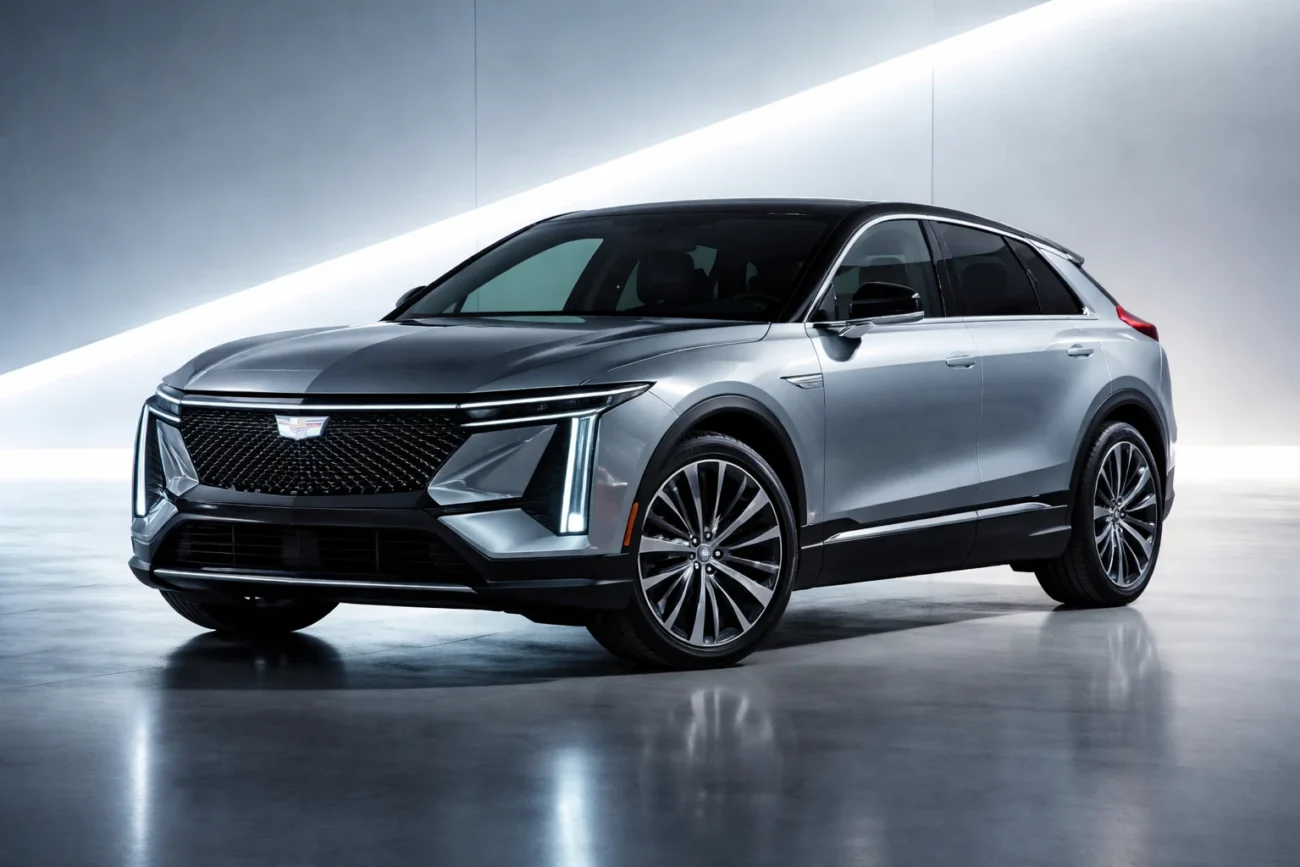
Electric vehicles promise simplicity—plug in, charge up, drive. But once you get behind the wheel of something like the Cadillac Lyriq, that simplicity quickly turns into a menu of choices. Tour mode, Sport-like settings, Snow/Ice, selectable all-wheel drive, even a customizable “My Mode.” Each one tweaks how the vehicle behaves.
So naturally, owners and shoppers ask a straightforward question: do these driving modes actually change how far the Lyriq can go, or how much battery it uses?
The short answer is no—at least not in the way many people expect. Cadillac does not publish different official range figures for each driving mode. But that doesn’t mean the modes are irrelevant to efficiency. They can change how the car uses energy in the real world, sometimes in ways that matter more than a spec sheet ever will.
Official range numbers don’t change with drive modes
Start with the hard numbers, because this is where confusion often begins. The Cadillac Lyriq’s range is measured under EPA testing, and those figures are tied to the vehicle’s configuration, not the selected driving mode.
For the 2025 model year, the rear-wheel-drive Lyriq is rated at up to 326 miles of range. All-wheel-drive versions come in slightly lower, around 319 miles or 303 miles depending on equipment. Energy consumption is also listed in kilowatt-hours per 100 miles, with rear-wheel-drive models generally being more efficient than their dual-motor counterparts.
What’s missing from those figures is just as important as what’s included. There’s no “Sport mode range,” no “Tour mode range,” and no separate efficiency rating for Snow/Ice mode. That’s because drive modes are not part of the EPA’s standardized testing process. The car is tested in a consistent configuration designed to reflect typical driving conditions, not every possible setting.
So if you’re expecting the Lyriq to suddenly gain or lose 20 miles of official range just by switching modes, that’s not how it works.
What Cadillac’s drive modes actually change
To understand why driving modes still matter, you have to look at what they control. Cadillac describes Lyriq’s modes as ways to adjust how the vehicle responds to driver input and road conditions.
Tour mode is the default. It’s designed for everyday driving, balancing comfort, efficiency, and responsiveness. Throttle input is smooth, steering effort is moderate, and the vehicle behaves predictably in most situations.
Snow/Ice mode softens throttle response and adjusts traction control to help maintain grip in slippery conditions. It’s less about performance and more about stability, especially when roads are wet or covered in snow.
Selectable all-wheel drive is another key feature. In AWD-equipped Lyriq models, engaging this mode activates the rear motor more consistently, providing better traction but also increasing the amount of hardware drawing power from the battery.
Then there’s My Mode, which lets drivers customize steering feel, acceleration response, and other characteristics. It doesn’t introduce new hardware behavior so much as change how aggressively the existing systems respond.
What you’ll notice is that none of these modes directly change the battery’s capacity or the vehicle’s core efficiency rating. They change how the car behaves—and that behavior is what influences energy use.
Why driving modes can still affect battery usage
Here’s where things get less black and white. Even though the official range stays the same, driving modes can absolutely influence how much battery you use on a given trip.
The biggest factor is throttle mapping. In modes that sharpen acceleration, the car responds more quickly to pedal input. That often leads to stronger bursts of power, which consume more energy. It’s not that the car is less efficient in a technical sense—it’s that the driver is more likely to use more energy.
There’s also the question of drivetrain engagement. In all-wheel-drive mode, both motors are working more consistently. That improves traction, especially in poor conditions, but it also introduces additional energy loss compared to running a single motor in rear-wheel-drive mode. This is one reason AWD Lyriq models have lower EPA range figures to begin with.
Snow/Ice mode, on the other hand, tends to reduce aggressive power delivery. In theory, that could help conserve energy. But in practice, it’s usually used in conditions—cold weather, slippery roads—that already reduce efficiency. So any gains from softer throttle response are often offset by external factors.
My Mode sits somewhere in between. If a driver configures it for relaxed acceleration, it could help improve efficiency. If they tune it for responsiveness, it may have the opposite effect.
So what does this actually mean? The modes don’t change the car’s capability—they change how likely you are to use that capability.
The AWD factor: where the real difference shows up
If one driving setting deserves special attention, it’s all-wheel drive. Unlike throttle response or steering feel, AWD directly changes how many motors are actively contributing to propulsion.
In a rear-wheel-drive Lyriq, only one motor is doing the work. That setup is inherently more efficient, which is why it delivers the highest range figure. In AWD models, a second motor adds traction and performance, but also increases energy consumption.
When AWD mode is actively engaged, especially in situations where it’s not strictly necessary, you’re effectively trading efficiency for stability and control. The difference isn’t dramatic over short distances, but over a long drive it can add up.
That said, AWD mode exists for a reason. On wet or snowy roads, the added traction can improve safety and confidence. In those conditions, the slight increase in energy use is a worthwhile trade-off.
But here’s the key point: AWD’s impact on range is tied to hardware, not just software. It’s not a cosmetic setting—it changes how the vehicle operates at a mechanical level.
Driver behavior matters more than the mode itself
There’s a tendency to treat drive modes as the primary driver of efficiency. But in reality, they often play a secondary role compared to how the car is driven.
Speed is one of the biggest factors. Driving at highway speeds, especially above 70 mph, can significantly reduce range regardless of the selected mode. Aerodynamic drag increases rapidly at higher speeds, and no drive mode can fully counteract that.
Temperature is another major variable. Cold weather affects battery performance and increases the need for cabin heating, both of which reduce range. Even if Snow/Ice mode is designed for winter driving, it doesn’t eliminate those underlying challenges.
Acceleration habits also make a difference. Frequent hard acceleration—more likely in a sportier setup—uses more energy than gradual, steady driving. The mode might encourage certain behavior, but it’s still the driver’s foot that determines how much power is used.
Regenerative braking plays a role as well. The Lyriq offers one-pedal driving and regenerative braking features that can help recover energy. These systems operate somewhat independently of drive modes, but how aggressively you use them can influence overall efficiency.
In other words, the mode sets the tone, but the driver writes the story.
What real-world drivers tend to notice
Talk to Lyriq owners, and a pattern emerges. Most don’t report dramatic swings in range simply from switching modes. Instead, they notice subtler changes tied to how the car feels and responds.
In Tour mode, the vehicle feels composed and predictable, making it easier to drive smoothly. That tends to support better efficiency over time. Drivers often settle into a steady rhythm, which helps maintain range.
Switch to a more responsive setup, and the car feels quicker and more engaging. But that extra responsiveness can lead to more aggressive driving, even unintentionally. Over the course of a week or a month, that can show up as slightly higher energy use.
AWD mode is where differences become more noticeable, especially in mixed driving conditions. Drivers may see a small drop in projected range when the system is actively using both motors more frequently.
But these changes are gradual, not dramatic. You’re not going from 300 miles to 250 miles just by switching modes. Instead, you might see a few percentage points of difference depending on conditions and driving style.
The bigger picture: what really affects Lyriq range
If the goal is to maximize range, drive modes are only one piece of the puzzle—and not the biggest one.
Speed, temperature, terrain, and driving habits all have a larger impact. Long highway drives at high speed will reduce range more than any mode selection. Cold weather can take a noticeable toll, even with careful driving. Hills and elevation changes also play a role, especially over longer distances.
Vehicle configuration matters too. The difference between rear-wheel drive and all-wheel drive is built into the hardware and reflected in official ratings. Wheel size and tire choice can also influence efficiency, though those effects are usually smaller.
Charging habits and battery management round out the picture. Keeping the battery within an optimal range and preconditioning the vehicle before driving can help improve efficiency, especially in colder climates.
So while drive modes are worth understanding, they’re not the main lever when it comes to range.
Frequently Asked Questions
Does Sport mode reduce range in the Cadillac Lyriq?
Sport-style settings can lead to higher energy use, but not because the vehicle suddenly becomes less efficient. The sharper throttle response encourages quicker acceleration, which uses more power. Over time, that can reduce real-world range, even though the official EPA rating remains unchanged.
Does AWD mode use more battery in the Lyriq?
Yes, all-wheel-drive operation generally uses more energy because it engages an additional motor. This is reflected in the lower EPA range figures for AWD models compared to rear-wheel-drive versions. The difference depends on how often the second motor is active.
Is Tour mode best for maximizing range?
Tour mode is designed for balanced, everyday driving, which often supports smoother acceleration and steadier energy use. While it doesn’t guarantee maximum range, it tends to make it easier to drive efficiently compared to more aggressive settings.
Does My Mode affect battery usage?
My Mode itself doesn’t directly change battery capacity or efficiency ratings. However, the way it’s configured can influence how the vehicle responds. A setup with softer acceleration may help conserve energy, while a more responsive setup could increase consumption.
Do driving modes change the official EPA range?
No, driving modes are not part of EPA testing procedures. The official range is based on the vehicle’s configuration, such as drivetrain and equipment, rather than the selected drive mode.
Does Snow/Ice mode hurt range?
Snow/Ice mode typically reduces aggressive power delivery, which could help conserve energy. But it’s usually used in cold or slippery conditions that already reduce efficiency, so overall range may still be lower in those situations.
Conclusion
So, do the driving modes in Cadillac Lyriq offer different ranges or battery usages? The answer depends on how you define “different.” They don’t come with separate official range ratings, and they don’t change the battery’s capacity or fundamental efficiency. On paper, the numbers stay the same.
But here’s the thing. Driving modes shape how the vehicle behaves, and that behavior influences how energy is used in the real world. Sharper throttle response, active all-wheel drive, and different traction settings can all nudge consumption up or down depending on how and where you drive.
That doesn’t make drive modes irrelevant. It just means they’re part of a larger system. They work alongside speed, weather, terrain, and driver habits, all of which play a bigger role in determining how far the Lyriq can go on a charge.
If you’re trying to stretch every mile, the smartest move isn’t obsessing over modes. It’s driving smoothly, managing speed, and using the vehicle’s features thoughtfully. The modes are tools, not magic switches. Used well, they can help. Used aggressively, they can cost you a little range. The difference is subtle—but real enough to notice over time.
