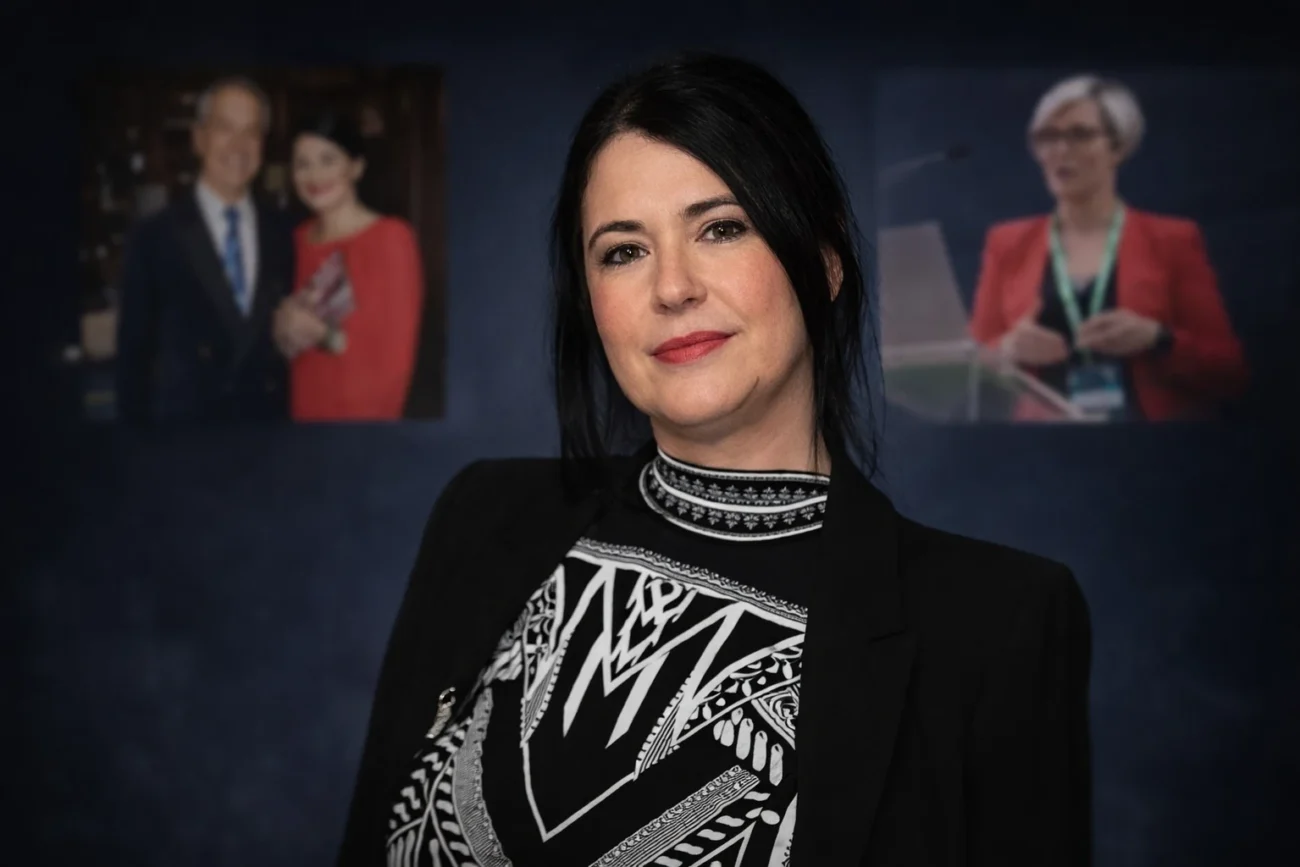
Search for Gráinne Hayes and the internet offers only fragments. A name tied to a well-known political figure. A handful of repeated facts. A scattering of short profiles that often echo one another. But behind that thin public record is a real person whose life has largely unfolded away from headlines, despite a connection that keeps her name in circulation.
Hayes is best known as the first wife of British politician Nigel Farage. That association alone explains why her name continues to surface in searches and biographical summaries. But here’s the thing: unlike many figures linked to high-profile public lives, Hayes has remained almost entirely private, leaving behind only a narrow, verifiable outline rather than a detailed public biography.
What emerges, then, is not a conventional life story filled with interviews and public milestones. Instead, it’s a quieter narrative shaped by a brief intersection with a man who would later become one of the most recognizable political figures in the United Kingdom.
Early Life and Irish Roots
Publicly available information about Gráinne Hayes’s early life is limited, and that absence speaks volumes. She is widely described as Irish, and most sources agree that she trained and worked as a nurse. Beyond that, there is little in the way of confirmed detail about her childhood, family background, or upbringing.
This kind of silence is unusual in an era when even minor public figures often leave extensive digital trails. But Hayes belongs to a different category: someone whose life became visible only through proximity to someone else’s story. Her early years, education, and formative influences remain largely undocumented in mainstream records.
Still, her profession offers some clues. Nursing, particularly in the 1980s, required rigorous training and long hours, often in demanding hospital environments. It suggests a life grounded in care, discipline, and practical responsibility rather than public attention.
The Accident That Changed Two Lives
Gráinne Hayes enters the historical record through a specific and dramatic event. In November 1985, Nigel Farage, then a young commodities trader, was seriously injured after being hit by a car in London. The accident left him with significant injuries and required a lengthy period of recovery.
During that time, Hayes was part of the medical team involved in his care. Accounts of Farage’s life consistently mention that the nurse who treated him during his recovery would later become his first wife. That nurse was Gráinne Hayes.
Here’s where it gets interesting. This moment is not just a footnote in Farage’s biography; it is the central point through which Hayes becomes known at all. Without it, her life would likely have remained entirely outside public awareness. Their meeting was not in a social setting or through shared networks, but in a hospital, during a period of vulnerability and recovery.
Marriage and a Life Together
In 1988, three years after the accident, Gráinne Hayes and Nigel Farage married. At the time, Farage was still building his career in finance, long before his rise to political prominence. Their relationship, then, began in a relatively ordinary context, without the scrutiny that would later follow Farage’s public life.
The marriage lasted nearly a decade, ending in divorce in 1997. During those years, Hayes and Farage had two sons, commonly identified as Samuel and Thomas. The couple’s family life, like much of Hayes’s story, was largely private and received little media attention at the time.
That privacy is significant. Unlike later periods in Farage’s life, which unfolded under intense public and political scrutiny, his first marriage existed mostly outside the spotlight. Hayes, by all available accounts, did not seek public attention, and there is no record of her giving interviews or making public statements about the relationship.
Motherhood and Family Life
The presence of two children adds another dimension to Hayes’s story. As a mother, her role continued beyond the end of her marriage, though details about her family life remain closely guarded. Public references to Farage’s children tend to be brief and respectful, reflecting the family’s overall approach to privacy.
What’s clear is that Hayes’s connection to Farage did not end with their divorce. Their shared role as parents meant an ongoing link, even as Farage moved into a new phase of his life and career. That continuity, though largely invisible to the public, is part of the broader human story behind the headlines.
But there’s a catch. Because Hayes has stayed out of public view, it is difficult to separate confirmed facts from assumptions. Many online profiles attempt to fill in gaps with speculation, but careful reporting requires restraint. The verified record remains focused on her role as a nurse, a wife, and a mother during a specific period in Farage’s life.
Life After Divorce
After her divorce from Farage in 1997, Gráinne Hayes disappears almost entirely from public documentation. There are no widely reported career updates, no confirmed public appearances, and no verified statements about her later life.
This absence has led to a curious dynamic online. As Farage’s political career grew—particularly during his leadership of the UK Independence Party and his role in the Brexit campaign—interest in his personal life expanded. That, in turn, brought renewed attention to earlier chapters, including his first marriage.
Yet Hayes herself did not re-enter the public sphere. She did not become a commentator, a memoirist, or a public figure in her own right. Instead, she remained consistent in her apparent preference for privacy, even as the man she once married became a household name.
The Internet’s Version of Gráinne Hayes
In recent years, a number of websites have published short profiles of Hayes, often with similar language and structure. These pages typically summarize the same core facts: her Irish background, her work as a nurse, her marriage to Farage, and their two children.
The numbers tell a different story, though. While these profiles give the impression of a detailed biography, many rely on the same limited pool of information. They often lack citations or draw from one another, creating a loop of repeated claims rather than independently verified reporting.
This raises an important question about how modern biographies are formed. In Hayes’s case, the digital record has grown not through new information, but through repetition. The result is a public profile that appears fuller than it actually is.
Why Her Name Still Draws Interest
Interest in Gráinne Hayes is closely tied to Nigel Farage’s continued visibility in British and international politics. As a prominent figure in debates around Brexit and UK politics more broadly, Farage’s life has been examined in detail. That attention naturally extends to his past relationships.
But here’s the thing: not every person connected to a public figure becomes public themselves. Hayes represents a different path, one where a person remains largely outside the narrative, even as their name becomes searchable.
There is also a broader cultural curiosity at work. Readers often look beyond public personas to understand the personal histories that shaped them. In Farage’s case, his first marriage is part of that story, even if it occupies only a small space in the larger picture.
What Can Actually Be Verified
At the center of any responsible biography is a commitment to verifiable facts. In the case of Gráinne Hayes, those facts form a concise but clear outline.
She is Irish and worked as a nurse. She met Nigel Farage after his 1985 accident and later married him in 1988. The couple had two children and divorced in 1997. Beyond that, the public record becomes sparse.
That said, the lack of additional detail should not be mistaken for a lack of significance. It simply reflects the boundaries between public and private life. Hayes’s story, as it appears in available sources, is one that intersects briefly with public history before returning to a more personal, less visible path.
Privacy in the Age of Search
Gráinne Hayes’s story highlights an unusual tension in modern biography. On one hand, there is a strong public appetite for information, driven by search engines and digital curiosity. On the other, there are individuals who choose not to participate in that visibility.
Hayes appears to fall firmly into the second category. There is no evidence that she has sought media attention or attempted to shape her public image. Instead, her name circulates largely because of its connection to someone else’s story.
That dynamic raises broader questions about how we think about public interest. Not every searchable name belongs to a public figure. Sometimes, as in Hayes’s case, it belongs to someone whose life has simply brushed against a more visible one.
Frequently Asked Questions
Who is Gráinne Hayes?
Gráinne Hayes is best known as the first wife of British politician Nigel Farage. She is widely described as an Irish nurse who met Farage while caring for him after a serious accident in 1985. Their relationship later developed into a marriage that lasted from 1988 to 1997. Beyond that connection, she has remained a private individual with limited public information available.
How did Gráinne Hayes meet Nigel Farage?
Hayes met Farage in a hospital setting after he was injured in a road accident in London in 1985. She was part of the medical team involved in his care during his recovery. Over time, their relationship moved beyond the clinical setting and became personal. They married three years later, in 1988.
Did Gráinne Hayes and Nigel Farage have children?
Yes, the couple had two children during their marriage. Their sons are commonly identified as Samuel and Thomas. Public references to the children are generally brief, reflecting a broader pattern of privacy around the family. Details about their upbringing and current lives are not widely documented.
When did Gráinne Hayes and Nigel Farage divorce?
Gráinne Hayes and Nigel Farage divorced in 1997 after nearly a decade of marriage. The reasons for the divorce have not been widely discussed in public sources. Following the separation, Farage went on to remarry, while Hayes largely stepped out of public view. There are no widely reported details about her life after the divorce.
Where is Gráinne Hayes now?
There is no widely confirmed public information about Gráinne Hayes’s current location or activities. She has maintained a low profile and does not appear to have a public-facing role. Most available information about her focuses on her past connection to Farage rather than her present life. This lack of detail reflects her consistent privacy over the years.
Conclusion
Gráinne Hayes’s biography is, in many ways, defined by what it does not include. There are no headline-making achievements, no public controversies, and no extensive media presence. Instead, there is a brief but meaningful intersection with a larger public story, followed by a return to private life.
That doesn’t make her story less real or less important. If anything, it highlights the difference between public visibility and personal significance. Hayes’s role in Farage’s early life, her work as a nurse, and her years as a mother all form part of a narrative that exists largely outside the spotlight.
The truth is, not every life becomes a public record. Some remain partly hidden, shaped by choices about privacy and distance from media attention. Hayes appears to have made that choice consistently, even as curiosity about her has grown.
As long as Farage remains a figure of interest, her name will likely continue to surface. But what readers will find is not a conventional biography filled with detail, but a reminder that some lives are lived quietly, beyond the reach of headlines, even in an age when almost everything else is visible.
