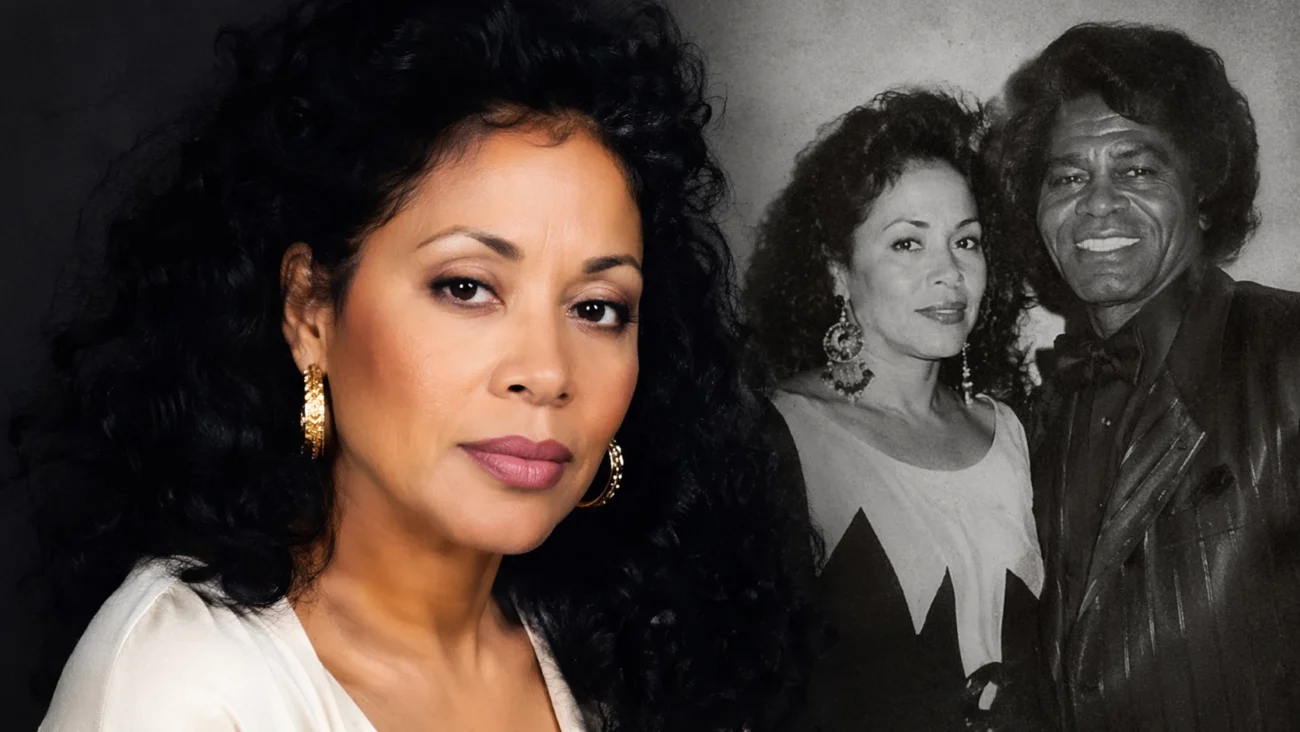
Search for “Adrienne Rodriguez,” and you’ll find a familiar pattern. Page after page introduces her as the third wife of James Brown, the “Godfather of Soul,” then quickly moves into fragments of a life that feel both specific and oddly thin. A birth date appears. A marriage year. A cause of death. But try to trace those details back to solid reporting, and the trail starts to blur.
That tension—between public curiosity and a fragile record—is what keeps her name circulating. Adrienne Rodriguez is remembered largely through her relationship with one of the most famous musicians of the 20th century, yet her own story is scattered across inconsistent sources and repeated claims. Some of those claims hold up. Others don’t. Many sit somewhere in between.
So who was Adrienne Rodriguez, really? What can be verified, and what has simply been copied across the internet until it sounds true? And why does her name still draw attention decades after her death?
Who Adrienne Rodriguez Was
Adrienne Rodriguez, often identified as Adrienne Lois Rodriguez, entered public view through her marriage to James Brown. They married in 1984, during a period when Brown was still performing widely and navigating a complicated personal life. He had been married before and would marry again later, but Rodriguez’s years with him—stretching into the mid-1990s—remain among the most discussed.
That said, the available information about her early life is limited. Many online profiles list a birth date of March 9, 1950, but those claims tend to point back to each other rather than to primary documents. The same pattern appears with descriptions of her upbringing, education, or family background. There are references to her being a performer or songwriter, but those claims are rarely supported by verifiable credits or recordings.
What emerges, instead, is a person whose public identity was shaped by proximity to fame. Rodriguez appears in photographs, at events, and in media reports tied to Brown. Outside of that orbit, the record becomes sparse.
The Marriage to James Brown
James Brown was one of the most influential figures in American music, but his personal life was marked by instability, conflict, and legal trouble. When he married Adrienne Rodriguez in 1984, he was already a global icon. The relationship quickly became part of the public narrative around him.
Accounts from the time show a marriage that drew attention not just because of Brown’s status, but because of repeated reports of domestic disputes. Law enforcement records and media coverage from the late 1980s and early 1990s describe incidents that led to arrests and charges involving Brown. These reports didn’t exist in isolation; they formed a pattern that would later shape how the marriage was remembered.
Rodriguez’s role in those reports is often reduced to a single label: victim. But here’s where the story requires care. Public records document allegations and legal actions, but they don’t capture the full complexity of a relationship lived in private. What can be said with confidence is that the marriage was turbulent, and that it unfolded under scrutiny that few couples experience.
The two remained together until Rodriguez’s death in 1996. There is no widely accepted record of children from the marriage, despite some online sources claiming otherwise. That inconsistency alone highlights how easily misinformation can take root when documentation is thin.
A Life Described Through Fragments
Try to build a full biography of Adrienne Rodriguez, and you run into a problem: most of what’s written about her relies on repetition rather than verification. The same sentences, the same dates, and the same claims appear across dozens of sites, often without attribution.
Some profiles describe her as a singer or performer, suggesting she had a career of her own before or during her marriage. But there is little in the way of confirmed recordings, credits, or industry references to support that. Without those anchors, it’s difficult to separate possibility from assumption.
This isn’t unusual for people connected to major celebrities. Their identities can become flattened into a supporting role, especially when the primary figure dominates the historical record. In Rodriguez’s case, the effect is striking. Her name appears frequently, but the substance behind it remains limited.
That absence shapes how she is remembered. Instead of a detailed portrait, there is a silhouette filled in by speculation, repetition, and the gravitational pull of James Brown’s legacy.
Domestic Violence Allegations and Public Record
The most documented aspect of Adrienne Rodriguez’s life is also the most difficult to address: the reports of domestic violence during her marriage to James Brown. These reports are not based on rumor alone. They were covered by news organizations at the time and, in some cases, led to legal action.
Brown faced multiple charges related to domestic incidents, including assault. Police reports and court proceedings placed the couple’s conflicts into the public domain. These incidents contributed to a broader pattern in Brown’s life, one that has been examined in biographies, documentaries, and investigative reporting.
But there’s a catch, though. Public records tell only part of the story. They capture moments of conflict, not the full context of a relationship. They also reflect the legal standards and reporting practices of the time, which were often less sensitive to victims of domestic abuse than they are today.
What remains clear is that Rodriguez’s name is tied to a period in Brown’s life marked by controversy and legal trouble. Any serious account of her life has to acknowledge that reality without reducing her entirely to it.
The Death of Adrienne Rodriguez
Adrienne Rodriguez died on January 6, 1996, at the age of 45, according to widely cited reports. The official account describes her death as the result of complications following cosmetic surgery. That explanation has been repeated in many sources and, on its face, presents a straightforward medical cause.
But over time, questions began to surface. Some associates and observers suggested that the circumstances surrounding her death deserved closer scrutiny. Years later, these suspicions would be folded into broader discussions about James Brown’s life and the unresolved aspects of his own death in 2006.
Here’s where it gets complicated. There is no widely accepted evidence that Rodriguez’s death was the result of foul play. Official findings at the time did not support that conclusion. Later claims, while persistent, have not been backed by new forensic evidence or legal action that changed the original determination.
That gap—between official record and lingering suspicion—helps explain why her death continues to draw attention. It sits at the intersection of celebrity, rumor, and the human tendency to look for hidden explanations when a story feels incomplete.
Why Her Story Still Circulates
Interest in Adrienne Rodriguez hasn’t faded, even decades after her death. Part of that comes from ongoing fascination with James Brown himself. His life, marked by musical genius and personal controversy, continues to generate new books, documentaries, and investigations.
Whenever Brown’s story is revisited, the people around him come back into focus. Rodriguez is one of those figures. Her name appears in timelines, in discussions of his marriages, and in accounts of his legal troubles. Each mention sends readers back to search engines, looking for more information.
But the numbers tell a different story. Despite that steady interest, there has been little new reporting focused specifically on her. Most of what’s available today is drawn from older sources, repackaged for new audiences. The result is a feedback loop where the same details are repeated, sometimes with small variations that create confusion rather than clarity.
That dynamic raises a broader question about how history is recorded. When a person’s story is tied to a more famous figure, their own narrative can become secondary, preserved only in fragments that survive because of that connection.
The Problem of Conflicting Information
Spend enough time reading about Adrienne Rodriguez, and you start to notice contradictions. Some sources claim she had children with James Brown. Others say she did not. Some describe a career in music; others make no mention of it. Even basic details like her birthplace can vary.
These inconsistencies aren’t just minor errors. They shape how readers understand her life. When the same claims appear across multiple sites, they can take on the appearance of fact, even if they lack a solid foundation.
This is a common issue in online biography writing, especially for figures who were not widely documented in their own right. Content is often built by aggregating existing material, and over time, inaccuracies can spread.
For a reader trying to make sense of Adrienne Rodriguez’s life, the safest approach is to focus on what can be confirmed: her marriage to James Brown, the documented incidents during that marriage, and the official account of her death. Beyond that, the record becomes less certain.
Adrienne Rodriguez and the Shadow of Fame
There’s a pattern in how history treats people like Adrienne Rodriguez. Their lives are filtered through the lens of someone else’s fame, leaving little room for independent recognition. The details that survive are those that intersect with the larger story.
In Rodriguez’s case, that means her identity is often reduced to a series of associations: wife, partner, figure in a troubled marriage. What’s missing is a fuller account of her own experiences, ambitions, and relationships outside that context.
This isn’t just about one person. It reflects a broader issue in how stories are told and remembered. When documentation is uneven, the narrative that emerges can feel incomplete, shaped as much by what is absent as by what is present.
So what does this actually mean? It means that any attempt to write about Adrienne Rodriguez has to acknowledge those limits. The goal isn’t to fill the gaps with speculation, but to make clear where the record ends.
Frequently Asked Questions About Adrienne Rodriguez
Who was Adrienne Rodriguez?
Adrienne Rodriguez, often identified as Adrienne Lois Rodriguez, is best known as the third wife of singer James Brown. She was married to him from 1984 until her death in 1996. Much of what is known about her comes from that relationship, as independent documentation of her life is limited.
How did Adrienne Rodriguez die?
Most reports state that she died on January 6, 1996, from complications related to cosmetic surgery. While there have been later questions raised about the circumstances, official findings at the time did not conclude that her death involved foul play.
Did Adrienne Rodriguez have children?
There is conflicting information on this point. Some online sources claim she had children with James Brown, while others state that she did not. There is no widely verified record confirming that the couple had children together.
What was Adrienne Rodriguez’s relationship with James Brown like?
Their marriage was marked by both public appearances and documented conflict. Reports from the time include allegations of domestic violence involving James Brown, some of which led to legal action. These incidents are a significant part of how the relationship is remembered.
Was Adrienne Rodriguez a singer or performer?
Some profiles describe her as a singer or songwriter, but there is little verified evidence to support a documented career in music. No widely recognized recordings or credits have been clearly linked to her.
Why is Adrienne Rodriguez still searched today?
Interest in her life is tied largely to ongoing attention on James Brown. As his story continues to be revisited in media and popular culture, people connected to him—including Rodriguez—remain part of that narrative.
Conclusion
Adrienne Rodriguez’s story is not one of clear lines and complete records. It is a story shaped by proximity to fame, by moments captured in public documents, and by long stretches where the details fade. What remains is a name that continues to surface, often accompanied by more questions than answers.
That uncertainty can be frustrating for readers looking for a straightforward biography. But it also points to a deeper reality. Not every life is preserved with the same level of detail, especially when it exists alongside someone whose story dominates the historical record.
There’s a tendency to fill those gaps with speculation, to build a fuller narrative from fragments. That approach can create the illusion of certainty, but it doesn’t bring us closer to the truth. A more honest account accepts the limits of what can be known and focuses on what can be verified.
Adrienne Rodriguez remains part of the story of James Brown, but she is also a reminder of how easily a person’s own story can become secondary. Her life, as it appears in the record, is incomplete. And perhaps the most accurate way to write about her is to acknowledge that fact, rather than trying to smooth it away.
