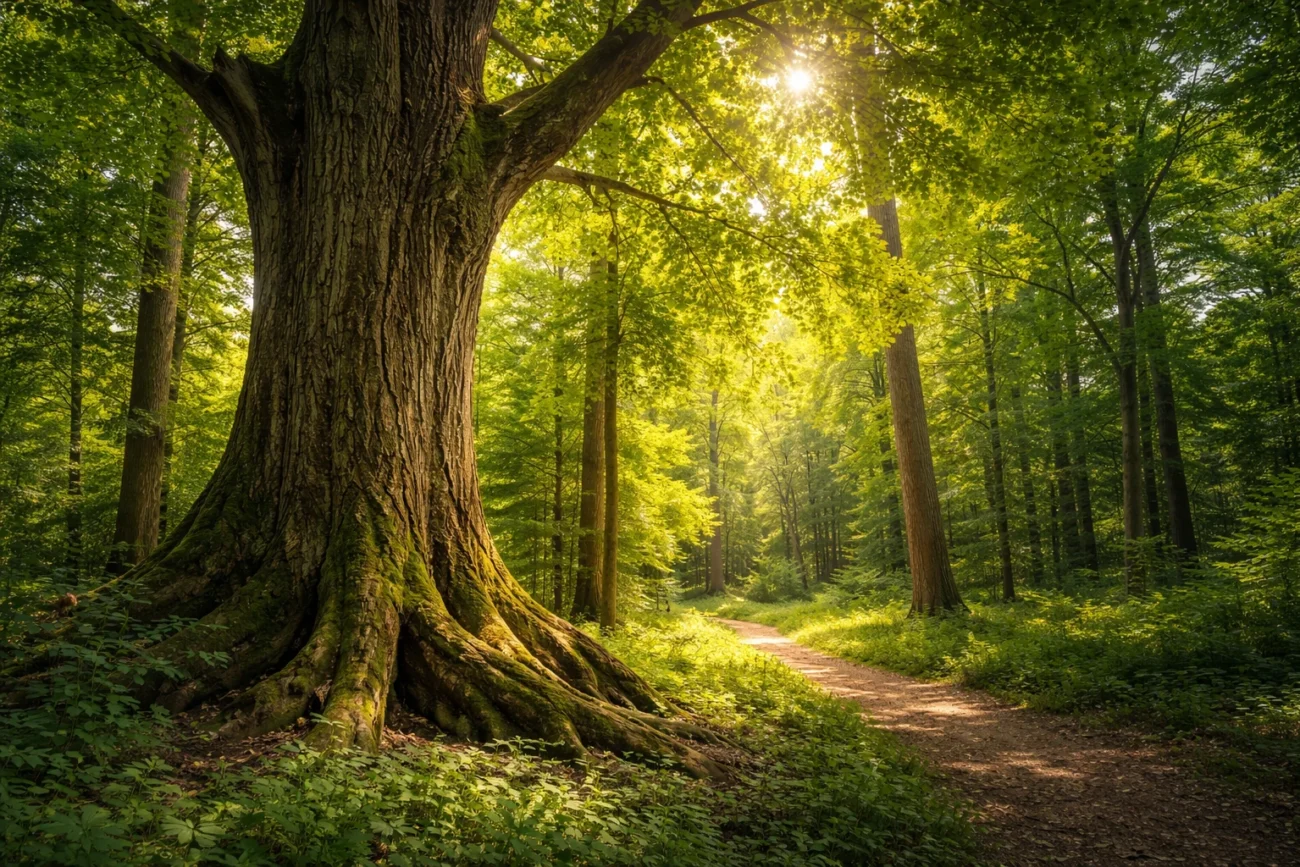
Search for “lewis center ohio champion trees” and you’ll find a familiar pattern. Page after page promises towering giants, rare species, and hidden natural landmarks tucked into this fast-growing suburb north of Columbus. It sounds compelling. But once you start checking the official records, the story shifts.
Lewis Center does sit in a region with impressive trees. It’s close to Alum Creek State Park and part of Delaware County, an area with a mix of old-growth remnants, managed forests, and suburban green space. But here’s the thing: there isn’t a neatly packaged, officially recognized list labeled “Lewis Center champion trees.” The truth is more complicated—and more interesting.
To understand what’s actually out there, you have to look at how Ohio defines champion trees, where the records are kept, and why a search tied to a community name like Lewis Center doesn’t always line up with how those trees are documented.
What a “Champion Tree” Means in Ohio
A champion tree isn’t just a big tree. In Ohio, it’s a measured title awarded through a statewide program managed by the Ohio Department of Natural Resources (ODNR). The system is structured and specific, based on a scoring formula rather than guesswork.
The score combines three elements: trunk circumference, total height, and one-quarter of the average crown spread. The circumference is measured at 4.5 feet above ground, a standard used across forestry programs. Add those numbers together, and you get a total score that determines whether a tree qualifies as a state champion for its species.
So what does this actually mean? A tree can be old, beautiful, or locally famous and still not qualify. Champion status is about measurable size compared to others of the same species across the state. It’s a competition, not a general label for impressive trees.
There’s another layer as well. Some Ohio trees go beyond the state level and earn national champion status, tracked by American Forests. Those are the largest known examples of their species in the entire country. Ohio has produced several national champions over the years, though the list changes as trees die, shrink, or are surpassed.
Why “Lewis Center” Doesn’t Show Up in Official Records
Here’s where many online articles go wrong. Champion trees are not cataloged by suburban place names like Lewis Center. They’re recorded by county, species, and sometimes by specific public lands or private property descriptions.
Lewis Center itself is an unincorporated community within Orange Township in Delaware County. That means any champion tree in the area would likely be listed under “Delaware County” rather than “Lewis Center.” It’s a small distinction, but it matters when you’re trying to verify claims.
That said, Delaware County does have a history of large and noteworthy trees. The challenge is separating confirmed champion trees from general mentions of big trees in parks or neighborhoods. A lot of content online blends the two, which leads to confusion.
The result is a keyword that feels precise—“lewis center ohio champion trees”—but points to a broader geographic reality. If you’re looking for verified champions, you need to widen the lens slightly.
The Alum Creek Connection
If there’s one place that consistently comes up in conversations about large trees near Lewis Center, it’s Alum Creek State Park. Located just minutes away, the park spans thousands of acres and includes forested areas that support mature tree growth.
Over the years, Delaware County—and by extension the Alum Creek area—has been associated with at least one widely discussed standout: a massive Eastern Cottonwood. At various points, this tree has been cited as a national champion or near-champion due to its size.
But here’s where careful reporting matters. Champion status can change. Trees grow, decline, or are overtaken by others elsewhere in the country. Some older references still describe trees as current champions even when that’s no longer the case.
That doesn’t make those trees any less impressive. It just means their official status needs to be checked against current records rather than repeated from outdated sources. For readers, the takeaway is simple: the Alum Creek area is one of the best places near Lewis Center to encounter large, mature trees, even if not all of them hold active champion titles today.
What You Can Actually Find Near Lewis Center
So if you head out from Lewis Center looking for champion trees, what are you likely to see?
You’ll find mature hardwood species common to central Ohio: oaks, sycamores, maples, cottonwoods, and hickories. Some of these trees reach impressive dimensions, especially in protected parkland or along waterways where soil and moisture conditions support growth.
Cottonwoods, in particular, are known for their rapid growth and large size. A well-established specimen can tower over surrounding trees, with a thick trunk and wide crown. Sycamores also stand out, especially near streams, with their mottled bark and massive girth.
But here’s the distinction that matters. Most of these trees are “big” in a general sense, not officially ranked champions. They’re worth seeing, worth photographing, and worth appreciating—but they may not appear in the state registry.
That said, the experience of finding a giant tree in a quiet corner of a park often matters more to visitors than its official score. The registry is one way to measure significance, but it’s not the only one.
How Champion Trees Are Found and Verified
The process for identifying champion trees in Ohio is more grassroots than many people realize. It doesn’t rely solely on scientists or government officials. Ordinary residents, hikers, and landowners play a major role.
If someone believes they’ve found a contender, they can measure the tree using the official guidelines and submit the data to ODNR. Forestry professionals then review the submission and verify the measurements before adding it to the registry.
This approach means the list is always evolving. New trees are discovered, others fall or decline, and rankings shift over time. It also explains why some areas appear underrepresented. If no one has nominated a tree, it won’t show up, even if it’s large enough to qualify.
There’s a catch, though. Not all champion trees are publicly accessible. Some stand on private property, and their exact locations may not be widely shared. That can make it harder for visitors to track them down, especially when relying on vague online descriptions.
Visiting Large Trees Near Lewis Center
For most people, the goal isn’t to verify a record. It’s to see something impressive in person. And in that sense, the Lewis Center area delivers—just not always in the way search results suggest.
Alum Creek State Park is the most obvious starting point. Its trails, wooded areas, and shoreline provide multiple chances to encounter mature trees. You won’t find signs marking “champion trees” at every turn, but you will find scale—trees that stand out simply because of their size and age.
Local parks and green spaces in Delaware County also offer opportunities, though they tend to feature younger or managed tree populations. As development has expanded, some older trees have been lost, while others have been preserved within park systems or along protected corridors.
Timing matters as well. Visiting in late spring or early fall can make large trees more visually striking, either with full leaf canopies or seasonal color. In winter, the bare structure of a tree becomes easier to see, which can highlight its size in a different way.
Why the Confusion Around “Lewis Center Champion Trees” Persists
So why does this keyword keep circulating if the reality is less straightforward?
Part of the answer is how search engines work. Location-based keywords perform well, especially when tied to nature or travel. Writers and marketers often create pages targeting those phrases, even when the underlying information is thin.
Over time, those pages start to echo each other. One mentions “champion trees in Lewis Center,” another repeats it, and soon it feels like a well-established fact. But when you trace it back to official records, the connection isn’t always there.
That doesn’t mean the area lacks noteworthy trees. It means the labeling is loose. The phrase “Lewis Center champion trees” becomes a kind of shorthand for “large or notable trees near Lewis Center,” rather than a precise reference to the state registry.
For readers, the best approach is to treat such claims as starting points, not final answers. Check the source. Look for dates. See whether the information aligns with current forestry data.
The Role of Champion Trees in Conservation
Beyond the search confusion, champion trees serve a real purpose. They draw attention to species that might otherwise go unnoticed and encourage people to value large, mature trees in their communities.
A tree that earns champion status often becomes a point of pride. It can influence how landowners manage their property or how local officials think about preservation. Even without legal protection, recognition can shift attitudes.
There’s also a scientific angle. Tracking the largest specimens of each species helps researchers understand growth patterns, habitat conditions, and long-term environmental changes. A champion tree isn’t just a curiosity—it’s a data point.
Near Lewis Center, where development continues to reshape the landscape, that perspective matters. Preserving mature trees, whether officially ranked or not, becomes part of a broader conversation about growth and sustainability.
How to Nominate a Champion Tree in Ohio
If you think you’ve found a tree near Lewis Center that could qualify, the process to nominate it is open to the public. You’ll need to measure the tree carefully, following ODNR guidelines, and submit the information for review.
Accuracy matters. A small error in measuring circumference or height can change the score significantly. That’s why the state provides clear instructions and, in some cases, tools or guidance to help ensure consistency.
Once submitted, the tree is evaluated and compared against existing records for its species. If it surpasses the current champion, it takes the top spot. If not, it may still be recorded as a notable specimen.
This system keeps the registry active and responsive. It also means that the next champion tree near Lewis Center could be discovered by someone who simply took the time to measure what they saw.
Frequently Asked Questions
Are there official champion trees in Lewis Center, Ohio?
There is no widely documented list of champion trees specifically labeled under “Lewis Center.” Most official records are organized by county, so any nearby champions would likely be listed under Delaware County rather than the community name.
Where can I see large trees near Lewis Center?
Alum Creek State Park is the most reliable place to find mature and impressive trees in the area. Forested sections and areas near water tend to support the largest specimens.
What qualifies a tree as a champion in Ohio?
A tree must have the highest score for its species in the state, based on trunk circumference, height, and crown spread. The scoring system is standardized and used across Ohio’s forestry program.
Are champion trees protected by law?
Champion status does not automatically provide legal protection. Some trees are preserved because of their location on public land or through private conservation efforts, but the designation itself is mainly honorary.
Can I nominate a tree near Lewis Center?
Yes, anyone can nominate a tree by measuring it according to official guidelines and submitting the data to the Ohio Department of Natural Resources for review.
Is the large cottonwood near Alum Creek still a champion tree?
That depends on the most current records. Some trees previously recognized as champions may lose that status over time, so it’s important to check updated listings rather than relying on older references.
Conclusion
The search for “lewis center ohio champion trees” starts with a simple idea: find something big, rare, and worth seeing. But the reality doesn’t fit neatly into a single list or location tag. Champion trees in Ohio are tracked by a system that doesn’t always align with how people search, and that creates confusion.
That said, the absence of a clear “Lewis Center” label doesn’t mean the area lacks impressive trees. Delaware County and nearby Alum Creek offer plenty of opportunities to see large, mature specimens, even if they aren’t all official champions. The experience is still there, just without the tidy packaging.
There’s also a broader takeaway. Champion trees are about more than records. They’re about noticing what’s already around you and understanding how it fits into a larger natural story. A tree doesn’t need a title to be remarkable, and sometimes the most memorable ones are the ones you find without a map.
If anything, the search term points to a gap between expectation and reality. But it also opens the door to something better: a more honest look at the trees near Lewis Center and a clearer sense of what makes them worth your time.
