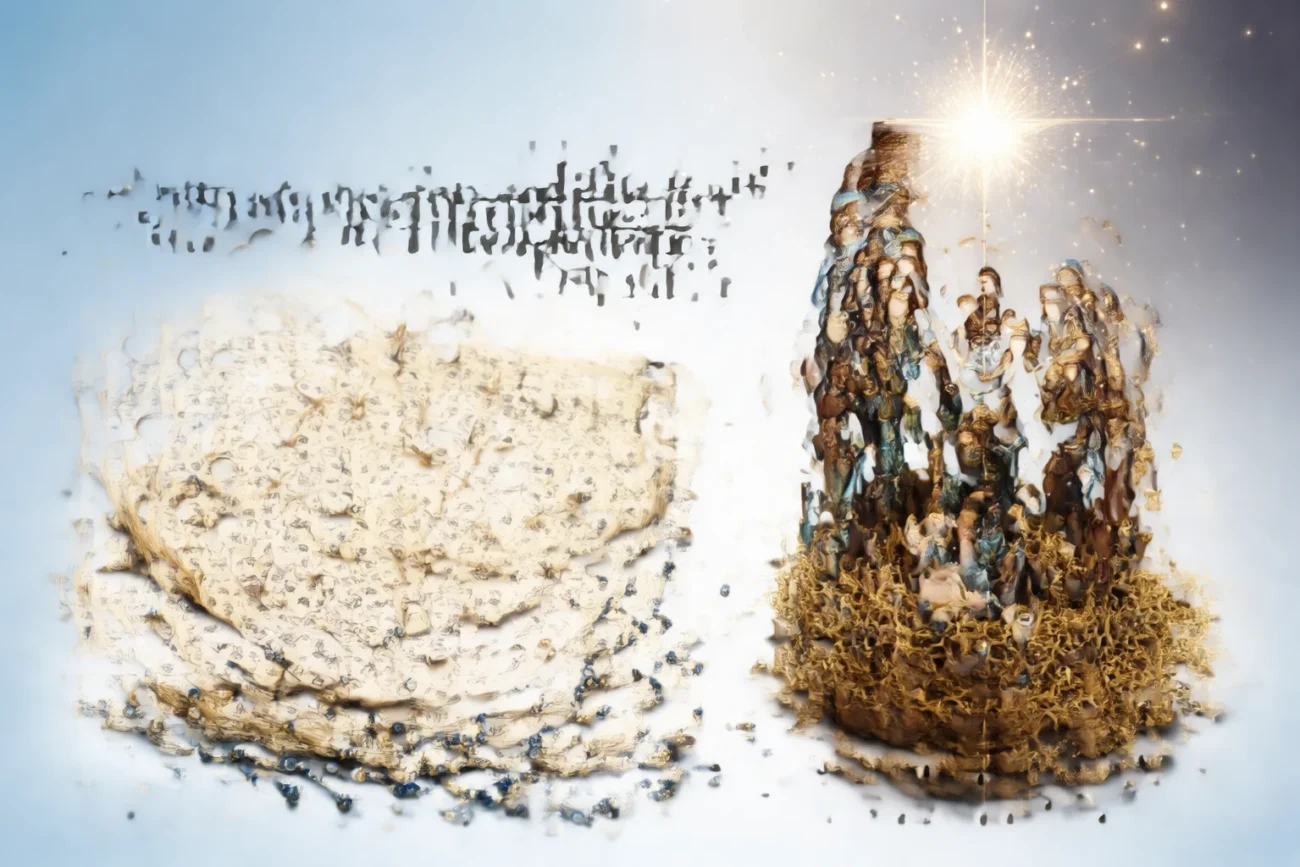
The word “nativität” looks simple at first glance. It seems close enough to the English “nativity” that many readers assume they already know what it means. But that assumption can lead people in the wrong direction.
In German, “Nativität” doesn’t usually show up in everyday conversation about birth or family life. Instead, it tends to appear in a more specialized context, most often tied to astrology. Meanwhile, in English, “Nativity” is strongly linked to the birth of Jesus, Christmas traditions, and familiar imagery like the manger scene.
So what does “nativität” actually mean? And why does it feel like the same word carries two very different ideas depending on where you encounter it? The answer sits at the crossroads of language, religion, and a long history of how people have tried to understand birth—not just as a biological event, but as something symbolic.
What “Nativität” Means in German
Start with the most direct answer. In modern German usage, “Nativität” refers to the position of the stars at the time of a person’s birth. That definition comes from standard reference sources like Duden, which classifies the word specifically within astrology.
This is not a casual or everyday term. Most German speakers would use “Geburt” to mean birth in general. “Nativität,” by contrast, appears in more formal, academic, or esoteric contexts. You’re more likely to see it in an astrology text than in a hospital report or a personal story.
That difference matters because it sets up the confusion. A reader who expects “nativität” to mean a simple birth event may miss the astrological layer entirely. And someone translating the word too quickly into English might land on “nativity” without realizing that the meaning has shifted.
The root of the word goes back to Latin “nativitas,” which simply meant birth. Over time, different languages narrowed or reshaped that meaning in their own ways. German leaned toward the astrological sense. English leaned toward a religious one.
Why “Nativität” Is Not the Same as “Nativity”
At first glance, the two words look interchangeable. They share the same Latin origin and even sound similar when spoken. But in practice, they live in different worlds.
In English, “Nativity” most often refers to the birth of Jesus Christ. The word appears in religious texts, Christmas services, art history, and everyday language around the holiday season. It can also refer to the “Nativity scene”—the display of figures like Mary, Joseph, and the infant Jesus in a manger.
There is a broader English meaning as well. “Nativity” can refer to birth in a general sense or to a person’s birth circumstances. In older or more technical contexts, it can even refer to a natal chart in astrology. But those uses are less common in everyday speech.
Here’s where it gets interesting. A German reader encountering “Nativity” in English will likely think of religion first. An English reader encountering “Nativität” in German may assume the same. But in many cases, the German term is pointing somewhere else entirely—toward the idea of a birth chart and the positions of planets at the moment of birth.
That mismatch can create problems in translation, interpretation, and even basic understanding. It’s one of those small linguistic traps that doesn’t look like a trap until you step into it.
Nativität in Astrology: A Birth Chart in Disguise
In astrology, the moment of birth is treated as a kind of snapshot. The positions of the sun, moon, and planets are mapped out and interpreted as a chart, often called a natal chart or birth chart in English.
“Nativität” in German refers to that same concept. It is the astrological configuration at the time of birth, believed by practitioners to carry meaning about a person’s character, tendencies, and life path.
This idea has deep roots. Western astrology dates back to ancient Babylonian and Hellenistic traditions, where the positions of celestial bodies were linked to events on Earth. By the Middle Ages and into the early modern period, astrology had become part of intellectual life in Europe, influencing medicine, politics, and personal decision-making.
That said, modern science does not support the claims of astrology. Astronomers and physicists treat planetary positions as measurable phenomena, not as forces that shape human destiny. Still, astrology continues to attract interest, and its terminology—words like “natal,” “horoscope,” and “nativität”—remains in use.
So when you see “Nativität” in a German text, especially in an academic or specialized context, it often signals this astrological framework. It’s not about the event of being born. It’s about what was in the sky at that moment.
Nativity in Christianity: The Birth of Jesus
Switch to English, and the picture changes. “Nativity” is closely tied to one specific story: the birth of Jesus.
The New Testament describes this event primarily in two Gospels, Matthew and Luke. Each offers a different account. Luke tells the familiar story of Mary and Joseph traveling to Bethlehem, finding no room at the inn, and placing the newborn in a manger. Matthew includes the visit of the Magi, guided by a star, and the tension surrounding King Herod.
The two accounts overlap in some ways but differ in details, and historians have long debated how to interpret them. There is no exact date given for Jesus’ birth in the biblical texts. The celebration of Christmas on December 25 developed later, likely in the fourth century.
But the story itself became central to Christian belief and practice. The Nativity is not just a historical claim. It is a theological statement about incarnation—the idea that God entered human life in a specific time and place.
Over centuries, this story shaped rituals, music, literature, and public celebrations. The word “Nativity” came to carry all of that weight. It became shorthand for a narrative that sits at the heart of Christian identity.
Nativity Scenes and Cultural Traditions
The Nativity is not just a text. It is also an image, repeated in countless forms across cultures.
Nativity scenes, also known as crèches, are one of the most visible expressions of the story. These displays typically include Mary, Joseph, the infant Jesus, shepherds, animals, and sometimes the Magi. The tradition is often traced back to St. Francis of Assisi, who is said to have created a live nativity scene in 1223 to help people visualize the story.
Over time, different regions added their own variations. In Italy, handcrafted figurines became an art form. In Germany and Austria, nativity scenes often appear in homes and public spaces during Advent. In Latin America, large-scale displays can include entire villages surrounding the central scene.
These traditions reinforce the association between “Nativity” and a specific set of images and rituals. For many people, the word immediately brings to mind a wooden stable, a star overhead, and a quiet moment of birth.
But that association is cultural, not universal. It reflects how English-speaking and Christian-majority societies have used the word, not how it functions in every language.
Translation Matters: Choosing the Right Meaning
So what happens when you need to translate “Nativität” into English?
There’s no one-size-fits-all answer. The correct translation depends on context, and getting it wrong can change the meaning of a sentence entirely.
In an astrology text, “Nativität” should usually be translated as “nativity” in the sense of a birth chart, or more clearly as “natal chart” or “birth chart.” In many cases, using “nativity” alone might confuse readers, so translators often choose a more explicit term.
In a religious or historical context, especially when referring to Christian themes, “Nativität” may align more closely with “Nativity” as English readers understand it. But this use is less common in modern German outside specific discussions of art or theology.
There’s a catch, though. Automated translation tools often default to the most common English equivalent without considering context. That can produce translations that are technically correct but misleading in practice.
Human judgment still matters. A translator needs to read the surrounding text, identify the subject, and choose the word that fits the meaning, not just the dictionary entry.
Common Misunderstandings Around “Nativität”
Misunderstandings around this word tend to follow a pattern.
One common mistake is assuming that “Nativität” always refers to Jesus or Christmas. That assumption makes sense if you’re coming from English, but it doesn’t hold in many German texts.
Another is treating “Nativität” as a simple synonym for “birth.” In most modern usage, it carries a narrower meaning, especially when tied to astrology.
There is also confusion around the English word “nativity” itself. While it can refer to birth in general, its dominant cultural meaning is religious. That dominance can overshadow other uses, even when those uses are technically correct.
These mix-ups may seem small, but they can affect how people read texts, interpret ideas, and understand cultural references. Language shapes expectation, and expectation shapes interpretation.
Frequently Asked Questions About Nativität
What does “nativität” mean in German?
In modern German, “Nativität” usually refers to the astrological configuration of the stars at the time of a person’s birth. It is a specialized term, not commonly used in everyday language for birth.
Is “nativität” the same as “nativity” in English?
They share the same origin, but their common uses differ. “Nativity” in English is often linked to the birth of Jesus, while “Nativität” in German is more closely associated with astrology.
Can “nativität” refer to the birth of Jesus?
It can, especially in discussions of art or theology, but that is not its primary modern use in German. Most references to Jesus’ birth in German would use other terms or phrases.
What is the connection between nativität and astrology?
In astrology, “Nativität” refers to a person’s birth chart—the positions of celestial bodies at the moment of birth. This concept has roots in ancient traditions that linked the sky to human life.
Why is the word so confusing for translators?
The confusion comes from the shared Latin root and the different paths the word has taken in different languages. Without context, it is easy to choose a translation that fits one meaning but not the intended one.
Does “nativity” always mean the birth of Jesus in English?
Not always. The word can refer to birth in general or to a natal chart in astrology, but in common usage, it most often points to the birth of Jesus and related traditions.
Conclusion: One Word, Two Traditions
“Nativität” is a small word with a split identity. In German, it leans toward astrology, pointing to the sky at the moment of birth. In English, its closest counterpart carries the weight of a religious story that has shaped centuries of culture.
That difference is not just a quirk of language. It reflects how societies choose to frame birth itself—either as a moment tied to cosmic patterns or as a central event in a sacred narrative. Both ideas trace back to the same root, but they have grown in different directions.
Understanding that split helps in more than translation. It sharpens how we read texts, interpret meaning, and recognize the assumptions we bring with us. A familiar-looking word can still lead somewhere unexpected.
So the next time you see “nativität,” it’s worth pausing for a second look. The meaning isn’t hidden, but it does depend on where you stand—and what you expect to find.
