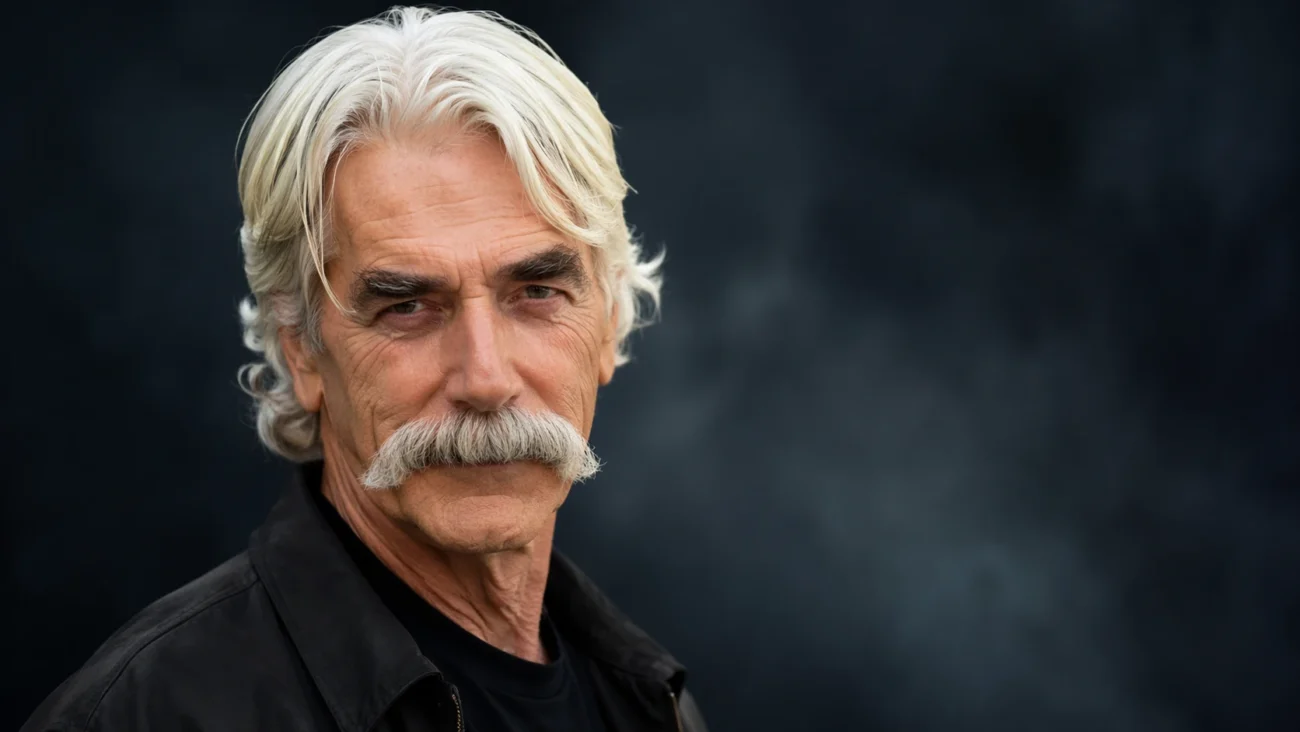
Search the question “what disease does Sam Elliott have,” and you’ll find a swirl of claims—some confident, some vague, many unverified. It’s the kind of query that spreads quickly online, especially when attached to a recognizable face. Elliott, with his gravelly voice and unmistakable presence, has been a fixture in American film and television for decades. As he’s aged in public, curiosity about his health has grown alongside his fame.
But here’s the thing. There is no credible, publicly confirmed record that Sam Elliott has a specific disease.
That answer may sound simple, but the story behind the question is more complicated. Rumors about his health didn’t come out of nowhere. They built over time, shaped by appearances, speculation, and even misleading advertisements. To understand why so many people are asking, it helps to look at what’s actually known—and what isn’t.
The Short Answer: No Confirmed Disease
Sam Elliott, born August 9, 1944, is now in his 80s. Like many actors who have stayed in the public eye for decades, he has aged visibly. That alone often triggers speculation. But aging, even when it’s noticeable, is not the same as illness.
There has been no verified statement from Elliott, his representatives, or any reputable medical or journalistic source confirming that he has Parkinson’s disease, COPD, cancer, or any other widely rumored condition. The absence of confirmation matters. In celebrity health reporting, a diagnosis typically becomes public through interviews, official statements, or documented medical disclosures. None of that exists here.
So what does this actually mean? It means the question people are asking is based more on perception than on fact. And perception can be misleading, especially when it spreads online without context.
Why People Think Sam Elliott Is Sick
The rumor cycle around Elliott’s health didn’t start with a single event. It grew from a series of observations and assumptions, repeated often enough to feel real.
One of the biggest drivers is his physical presence. Elliott has long had a slow, deliberate gait. In some appearances, he appears to favor one side or move with stiffness. For viewers who don’t know his history, that can look like a neurological condition. But physical movement alone doesn’t diagnose anything.
His voice also plays a role. Elliott’s deep, raspy tone is one of his trademarks. It’s easy to forget that this voice has been consistent for decades. Still, some people interpret it as a sign of respiratory illness, especially when paired with his age. That leap—from recognizable voice to assumed disease—is where speculation takes hold.
There’s also the simple reality of time. Elliott has been acting since the late 1960s. Audiences have watched him age in real time. When a public figure changes slowly over decades, those changes can feel more dramatic than they actually are.
The Role of Injuries and Wear From a Long Career
Actors who build careers in Westerns and physically demanding roles often carry the marks of that work. Elliott’s filmography includes countless roles that required horseback riding, outdoor shoots, and long hours on set. Over time, that kind of work can take a toll.
There have been references in interviews and industry profiles suggesting he has dealt with the kind of physical wear you’d expect from decades of action-heavy roles. These are not unusual for someone with his career path. Joint stiffness, posture changes, and minor mobility issues are common in aging actors, especially those who spent years doing their own physical scenes.
But here’s where it gets tricky. Observers often connect those visible signs to specific diseases, even when there’s no evidence. A slower walk becomes Parkinson’s. A slight stoop becomes a neurological disorder. That pattern says more about how people interpret aging than about Elliott’s actual health.
The COPD Rumors and Misleading Ads
One of the more persistent claims linked to Elliott’s name is COPD, or chronic obstructive pulmonary disease. These rumors didn’t just appear randomly. They were amplified by online advertisements and sponsored content that used his image to promote respiratory treatments.
Some of these ads gave the impression that Elliott was endorsing or even suffering from COPD. In reality, many of these promotions were misleading at best and outright scams at worst. They relied on his recognizable face to sell products, often without his involvement or approval.
This is where the rumor cycle gets a boost. A reader sees an ad suggesting Elliott has COPD. They search his name. They land on articles repeating the claim. The repetition gives the idea weight, even though it lacks credible sourcing.
So what’s the takeaway? There is no verified evidence that Sam Elliott has COPD. The association largely comes from marketing tactics that blurred the line between fact and promotion.
Parkinson’s Disease: Another Common Claim
Another disease frequently tied to Elliott in online searches is Parkinson’s. The reasoning behind this claim usually points to perceived changes in his posture or movement. Some viewers interpret a slight stiffness or controlled motion as symptoms of a neurological condition.
But there’s a catch. Parkinson’s disease has specific clinical signs that go far beyond general stiffness or a measured pace. Without a medical diagnosis or confirmation from Elliott himself, these assumptions remain speculation.
Public figures with Parkinson’s often speak about it openly, whether to raise awareness or explain changes in their work. Elliott has not done so. In the absence of that kind of disclosure, there is no basis to claim he has the condition.
How Aging in Public Fuels Health Rumors
Aging is rarely neutral when it happens in front of millions of people. Every change becomes a data point. Every appearance gets compared to older ones. Over time, those comparisons turn into narratives.
Elliott’s case fits that pattern. His face, posture, and movement have changed over the years, as anyone’s would. But because he is a familiar figure, those changes are more visible and more scrutinized.
There’s also a broader cultural tendency to link aging with illness. When someone looks older, people often assume there must be an underlying health issue. That assumption doesn’t hold up under scrutiny, but it’s powerful enough to shape online searches.
Not everyone agrees with this line of thinking, but the pattern is clear. Public aging often leads to private speculation, and in the internet age, that speculation spreads fast.
Is Sam Elliott Still Working?
One of the simplest ways to gauge a public figure’s health—at least in broad terms—is to look at their activity. Elliott has continued to appear in film and television projects well into his later years. His work in recent series and appearances shows he remains professionally active.
In 2026, he even made a cameo appearance at Coachella, sharing the stage during a performance that caught widespread attention. That moment didn’t prove anything about his medical history, but it did reinforce a basic point: he is still present, still working, and still engaging with audiences.
So what does this actually mean? It means the narrative of decline that often accompanies health rumors doesn’t match the visible reality of his career. Activity doesn’t equal perfect health, but it does challenge the idea that he is struggling with a serious, undisclosed disease.
The Difference Between Public Information and Private Health
There’s an important boundary in stories like this. Public figures share parts of their lives, but not everything. Health information, in particular, often remains private unless the individual chooses to disclose it.
Elliott has built a career on performance, not on personal exposure. He has not made his health a public topic, and that choice deserves to be respected. Speculating beyond available evidence crosses from reporting into guesswork.
That said, readers still want answers. The best way to provide them is to stick to what can be verified and to explain why certain claims don’t hold up. That approach doesn’t satisfy curiosity in the same way gossip does, but it builds something more durable: trust.
Frequently Asked Questions
Frequently Asked Questions About What Disease Does Sam Elliott Have
Does Sam Elliott have a confirmed illness?
No, there is no credible public confirmation that Sam Elliott has a specific disease. He has not announced any diagnosis, and reputable sources have not reported one. Most claims circulating online are based on speculation rather than evidence.
Why do people think Sam Elliott has Parkinson’s disease?
Some viewers interpret his measured movements or posture as signs of Parkinson’s. But those observations are not supported by medical confirmation. Without a diagnosis or public statement, the claim remains unverified.
Is it true that Sam Elliott has COPD?
There is no verified evidence that he has COPD. The association largely comes from misleading advertisements that used his image to promote respiratory products. Those ads created confusion but do not reflect confirmed health information.
Has Sam Elliott talked about his health publicly?
He has not made his health a central topic in interviews. Like many actors of his generation, he tends to keep personal matters private. That lack of disclosure contributes to speculation but doesn’t confirm any illness.
Why does Sam Elliott sometimes appear to walk differently?
Changes in movement can come from many factors, including age and the physical demands of a long acting career. Without a medical diagnosis, it’s not accurate to attribute those changes to a specific disease.
Is Sam Elliott still active in his career?
Yes, he continues to work and make public appearances. His recent projects and appearances show that he remains engaged in the entertainment industry, even in his 80s.
Conclusion
The question “what disease does Sam Elliott have” reflects a mix of curiosity, concern, and misinformation. It’s a reminder of how quickly speculation can take shape around public figures, especially those who have been in the spotlight for decades. In Elliott’s case, the answer is straightforward: there is no confirmed disease.
But the story doesn’t end there. The persistence of the question reveals how easily perception can turn into belief. A slower walk, a familiar voice, or a misleading advertisement can all feed into a narrative that feels convincing, even when it isn’t backed by fact.
There’s a broader lesson here about how we interpret aging in public. Not every visible change signals illness. Not every rumor deserves to be repeated. And not every question has a hidden answer waiting to be uncovered.
What remains clear is that Sam Elliott continues to live and work on his own terms. Until he chooses to share more about his health—if he ever does—the responsible answer stays the same: there is no verified evidence that he has a specific disease.
