Type “pulsamento” into a search bar and you’ll find a strange mix of answers. Some pages treat it like a poetic idea about life and energy. Others describe it as a technical music term. A few stretch it into science, wellness, or even digital systems. The result is confusion. People searching the word aren’t looking for philosophy. They want to know what it actually means—and whether it means anything specific at all.
But here’s the thing. “Pulsamento” isn’t a made-up word, nor is it as broad as many websites suggest. It sits somewhere between language, music, and translation, and the meaning only becomes clear when you separate grounded usage from loose interpretation. That’s where this article starts: with the facts, the context, and the places where the term holds up—and where it doesn’t.
What Does “Pulsamento” Mean?
At its core, “pulsamento” relates to the idea of a pulse—a rhythmic beating or repeated motion. The word traces back to Latin roots tied to striking, beating, or throbbing. In Romance languages, similar words describe both physical pulse, like a heartbeat, and rhythmic repetition in sound or motion.
So what does this actually mean in practice? In its most basic sense, “pulsamento” refers to a regular, repeating action that creates rhythm or flow. That could apply to music, where timing and repetition are central, or to physical phenomena like vibration or heartbeat. The word itself doesn’t carry a fixed, universal definition across all fields. Its meaning depends heavily on context.
That said, one context stands out as more credible than the rest: music, and more specifically, guitar technique.
The Music Connection: Pulse, Touch, and Guitar Technique
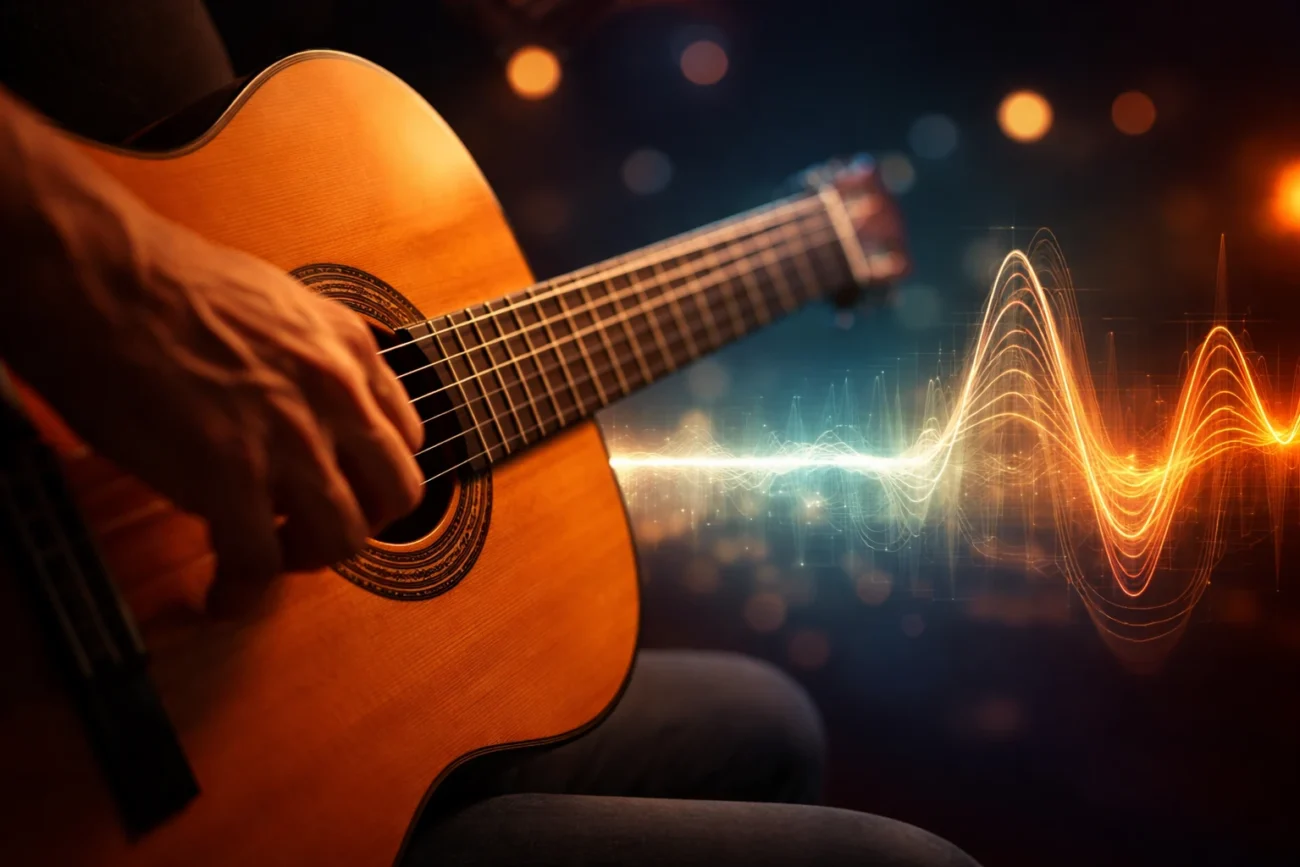
Among musicians—especially those working in classical guitar—terms derived from “pulse” often refer to how rhythm is physically produced. In this setting, “pulsamento” is sometimes used to describe a plucking approach that emphasizes light contact and fluid motion, rather than forceful attack.
Here’s where it gets more precise. Classical guitar technique usually distinguishes between two main right-hand strokes: apoyando (rest stroke) and tirando (free stroke). Apoyando involves the finger coming to rest on the next string after plucking, producing a fuller, heavier sound. Tirando, by contrast, lets the finger move freely away from the string, creating a lighter and more flowing tone.
In some teaching contexts—especially informal ones or translations—“pulsamento” has been used to describe something close to this free, controlled plucking motion. Not everyone agrees on that label, and it doesn’t appear consistently in formal method books. But the association with touch, pulse, and rhythmic feel lines up with how musicians actually think about sound production.
That’s the key point. In music, “pulsamento” isn’t about abstract ideas. It’s about how the hand moves, how the string responds, and how rhythm is felt in the body.
Why the Meaning Gets Blurry Online
If the musical meaning is fairly grounded, why do so many websites stretch the word into something much broader?
The answer has less to do with language and more to do with how content spreads online. Over the past few years, clusters of low-authority sites have published nearly identical articles about “pulsamento,” each expanding the term into new areas—biology, mindfulness, digital systems, even personal growth. Many of these pages use similar phrasing, suggesting they’re built on recycled templates rather than independent research.
Here’s where it gets interesting. These articles rarely cite dictionaries, academic sources, or established music texts. Instead, they present “pulsamento” as a universal concept that applies everywhere: the rhythm of life, the pulse of technology, the flow of energy. That might sound appealing, but it blurs the line between explanation and invention.
There’s a catch, though. Once enough of these pages exist, they start to reinforce each other. Search engines pick up the pattern, and the word begins to look broader than it really is. Readers end up stuck between vague definitions and technical fragments, unsure which one to trust.
Language Roots and Translation Drift
Part of the confusion comes from how words move between languages. “Pulsamento” resembles Italian or Spanish constructions, but it doesn’t function as a common everyday word in the way “pulse” or “pulsation” does in English. Instead, it sits closer to a derived or specialized form, built from roots that are widely understood but not always used in that exact structure.
Translation plays a big role here. When technical terms move from one language to another—especially in music—they often shift slightly in meaning. A word used informally by one teacher might get picked up and repeated as a formal term elsewhere. Over time, the distinction fades.
So what does this actually mean for readers? It means that “pulsamento” can feel familiar without being clearly defined. You recognize the root idea—pulse, rhythm, beating—but the exact usage depends on who’s using it and why.
How Musicians Actually Think About Pulse
Even if the word itself isn’t standardized, the concept behind it is central to music. Every performer, regardless of instrument, works with pulse. It’s the steady framework that keeps a piece moving forward.
For guitarists, that pulse isn’t just counted. It’s felt through the hands. The way a string is plucked changes how the rhythm comes across. A heavier stroke can make a beat feel grounded. A lighter stroke can make it feel fluid or suspended. That physical connection between movement and sound is what gives the idea of “pulsamento” some real footing.
But here’s the difference. Musicians usually talk about this in practical terms: timing, articulation, phrasing. They don’t rely on a single catch-all word to describe it. The concept exists. The label is optional.
Is “Pulsamento” a Standard Technical Term?
Short answer: not really.
You won’t find “pulsamento” consistently defined in major English-language music dictionaries. It doesn’t appear as a standard term in widely used classical guitar method books. And it’s not part of the core vocabulary taught in conservatories.
That doesn’t mean it’s meaningless. It means it’s informal, context-dependent, and sometimes borrowed or adapted. In smaller circles—especially where languages mix—it may be used as shorthand for a particular kind of touch or rhythmic feel.
Not everyone agrees on its value. Some musicians avoid it entirely, preferring established terminology that carries less ambiguity. Others use it casually, especially in conversation or online discussions. The difference comes down to precision. In formal settings, clarity matters more than creativity in naming.
What “Pulsamento” Does Not Mean
This is where a lot of articles go off track. “Pulsamento” is not a scientific framework for understanding the universe. It isn’t a recognized term in medicine for describing bodily rhythms. And it doesn’t have a formal definition in technology or systems theory.
That said, people do use pulse-based metaphors in those fields. You’ll hear about data pulses, signal rhythms, biological cycles. But those are described with established terms, not “pulsamento.”
So when you see the word applied to everything from heart health to digital innovation, it’s worth pausing. The idea of rhythm may connect those topics, but the label itself isn’t doing the work. It’s being stretched to fit.
Why the Word Keeps Showing Up
There’s a practical reason “pulsamento” keeps appearing online: it’s unusual enough to attract attention, but familiar enough to sound meaningful. That makes it a useful keyword for content creators trying to stand out in crowded search results.
The numbers tell a different story, though. Many of the pages using the term are recent, often published within the same time window, and follow similar structures. That pattern suggests coordinated trends rather than independent discovery.
For readers, this matters because it affects trust. A word that appears everywhere can feel authoritative, even if the underlying explanations are thin. Sorting that out takes a bit of skepticism—and a willingness to look for sources that go beyond surface definitions.
Common Questions About Pulsamento
Frequently Asked Questions
Is “pulsamento” a real word?
Yes, in the sense that it’s built from legitimate linguistic roots tied to pulse and rhythmic motion. But it’s not widely standardized in English dictionaries, and its usage varies depending on context.
Is pulsamento used in classical guitar?
It appears occasionally in informal or translated discussions about guitar technique, often linked to plucking style and rhythmic feel. However, it is not a core technical term in standard guitar pedagogy.
What is the difference between pulsamento and tirando?
In some contexts, pulsamento is loosely associated with a light, free plucking motion similar to tirando. That said, tirando is the established term, while pulsamento is more variable and less precise.
Does pulsamento have a meaning outside music?
It can be used in a general sense to describe rhythmic or pulsing motion. But many broader interpretations found online are not backed by formal definitions or widely accepted usage.
Why do so many websites define pulsamento differently?
Much of the variation comes from repeated content and loose interpretation. Once a few sites expand the meaning, others follow, creating a chain of similar explanations that aren’t always grounded in reliable sources.
Is pulsamento an Italian word?
It resembles Italian or Spanish forms and shares roots with Latin words related to beating or striking. However, its exact status as a standard term in modern usage is limited and context-specific.
Conclusion
“Pulsamento” is a good example of how language can drift in the digital age. A word with clear roots and a plausible meaning—pulse, rhythm, repeated motion—gets picked up, stretched, and repeated until it starts to mean everything and nothing at once.
But when you strip it back, the core idea is simple. In music, it points to the physical and rhythmic act of creating sound. In language, it reflects a long history of describing movement and beating patterns. Those uses hold up. The rest often doesn’t.
That said, the word isn’t useless. It just needs context. Used carefully, it can describe something real about rhythm and touch. Used loosely, it becomes filler—another vague term floating through search results without a clear anchor.
For readers, the takeaway is straightforward. If you see “pulsamento,” look at how it’s being used, not just what it claims to mean. The difference between a grounded explanation and a stretched one isn’t subtle. It shows up in the details—and in whether the word actually helps you understand something, or just sounds like it should.
